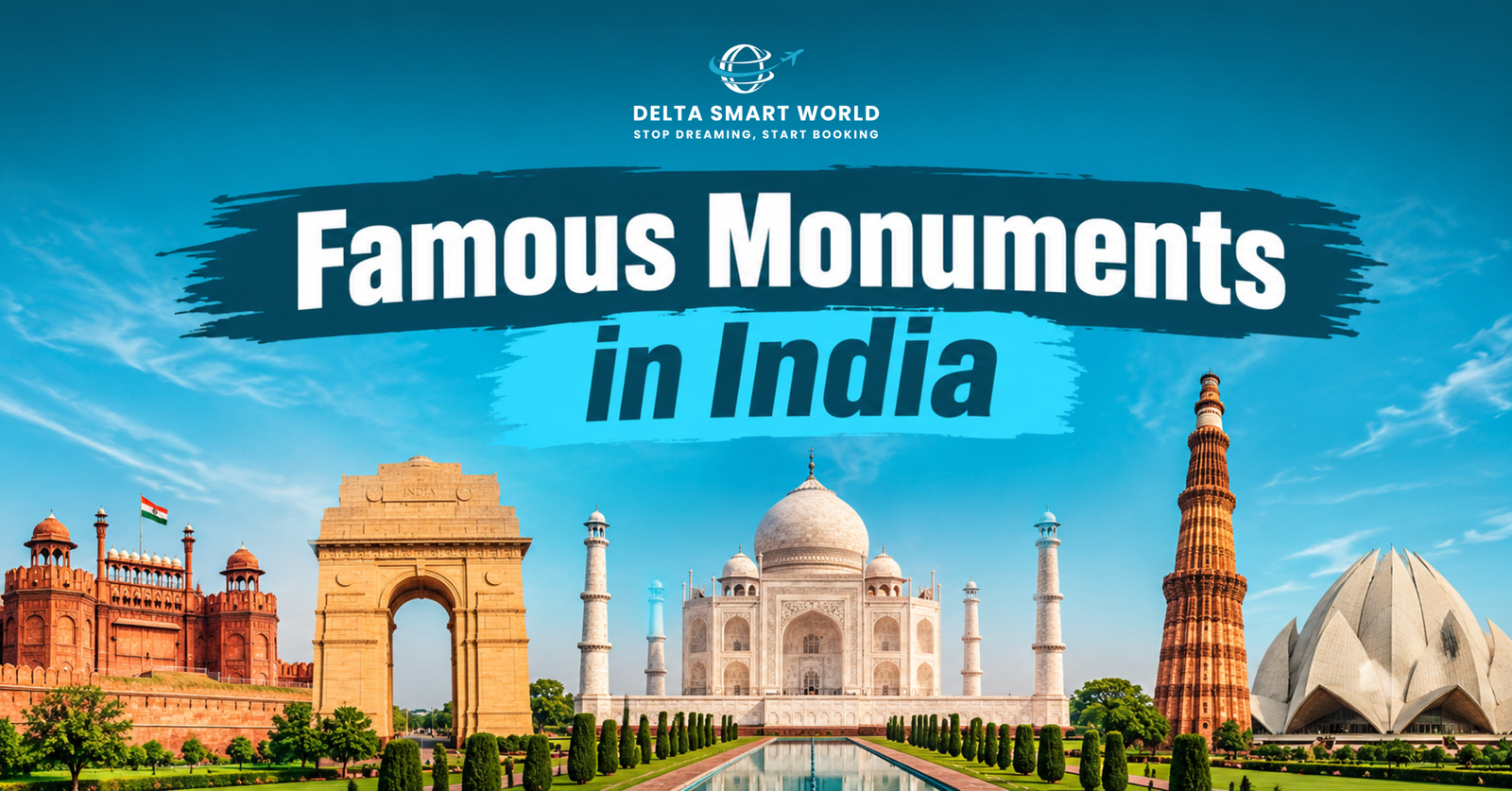
The most famous monuments in India include the Taj Mahal, the Red Fort, Qutub Minar, Humayun’s Tomb and India Gate. Beyond Delhi and Agra, travellers flock to Hampi, the Konark Sun Temple and Khajuraho. They also love the Ajanta and Ellora Caves and Amber Fort. Moreover, the Gateway of India, Charminar, Mysore Palace and the Golden Temple attract millions of visitors yearly.
Together, these sites tell the story of empires, faiths, artists and ordinary people. Some monuments celebrate love, while others mark victory, devotion or remembrance. Consequently, a single heritage journey across India can feel like travelling through several centuries at once.
In this guide, we explore each landmark region by region. First, we explain what makes these places special. Then, we share history, architecture highlights and practical visiting tips. Finally, we answer common questions and show how to pair heritage travel with genuine comfort.
Expert Tip from Delta Smart World: Don’t try to see everything in one trip. Instead, choose one region and explore it slowly. You will remember far more, and you will enjoy each monument without rushing.
What Makes the Famous Monuments in India So Special?
India holds one of the world’s deepest architectural records. Its monuments span more than two thousand years of continuous building. Furthermore, each dynasty left behind its own style, materials and symbols.
A Living Record of Many Civilisations
The Mauryas gave India its earliest stone stupas. Later, the Guptas refined temple design and sculpture. Meanwhile, southern dynasties such as the Pallavas, Cholas and Vijayanagara rulers raised soaring granite temples. In the north, the Delhi Sultanate introduced arches, domes and minarets.
Afterwards, the Mughals blended Persian, Central Asian and Indian ideas into something entirely new. Their gardens, tombs and forts still define the skyline of Delhi and Agra. Similarly, the Rajput kings built hilltop forts that guarded trade routes across the desert. Finally, the British added Indo-Saracenic and colonial landmarks to port cities like Mumbai and Kolkata.
As a result, famous monuments in India do not share a single look. Instead, they offer remarkable variety. You might stand inside a rock-cut cave one morning and admire a marble mausoleum that evening.
Global Recognition and Protection
UNESCO recognises dozens of Indian sites on its World Heritage List. You can browse the full list on the UNESCO World Heritage Centre’s India page. In addition, the Archaeological Survey of India (ASI) manages and conserves thousands of national monuments.
This protection matters greatly. It keeps these landmarks open, safe and authentic for future generations. Therefore, responsible travel helps support the work of conservation teams across the country.
Why Travellers Keep Returning
Many visitors come for the Taj Mahal and leave wanting more. India’s heritage rewards curiosity. Every fort hides a story, and every temple carving holds meaning. Above all, the monuments sit within living cities, so culture, food and festivals surround them.
Ready to Plan Your Vacations/Holidays?
Reach out to Delta Smart World’s team of destination specialists today!
Quick Overview: Famous Monuments in India at a Glance
Before we explore each site, here is a handy snapshot. Use this table to plan which regions suit your interests.
| Monument | City / State | Commissioned By | Era | UNESCO Site |
|---|---|---|---|---|
| Taj Mahal | Agra, Uttar Pradesh | Shah Jahan | 17th century | Yes |
| Red Fort | Delhi | Shah Jahan | 17th century | Yes |
| Qutub Minar | Delhi | Qutb-ud-din Aibak | 12th–13th century | Yes |
| Humayun’s Tomb | Delhi | Empress Bega Begum | 16th century | Yes |
| India Gate | Delhi | British Indian government | 20th century | No |
| Fatehpur Sikri | Uttar Pradesh | Akbar | 16th century | Yes |
| Golden Temple | Amritsar, Punjab | Guru Arjan Dev | 16th–17th century | No |
| Amber Fort | Jaipur, Rajasthan | Raja Man Singh I | 16th century | Yes |
| Hawa Mahal | Jaipur, Rajasthan | Maharaja Sawai Pratap Singh | 18th century | No |
| Gateway of India | Mumbai, Maharashtra | British Indian government | 20th century | No |
| Ajanta & Ellora Caves | Maharashtra | Several dynasties | 2nd century BCE onwards | Yes |
| Konark Sun Temple | Odisha | King Narasimhadeva I | 13th century | Yes |
| Khajuraho Temples | Madhya Pradesh | Chandela dynasty | 10th–11th century | Yes |
| Hampi | Karnataka | Vijayanagara Empire | 14th–16th century | Yes |
| Brihadeeswarar Temple | Thanjavur, Tamil Nadu | Rajaraja Chola I | 11th century | Yes |
| Charminar | Hyderabad, Telangana | Muhammad Quli Qutb Shah | 16th century | No |
Famous Monuments in India: The Northern Icons
North India holds the country’s most photographed landmarks. Delhi, Agra and Amritsar alone could fill a week of sightseeing. Moreover, good road and rail links make this region easy for first-time visitors.
Taj Mahal, Agra
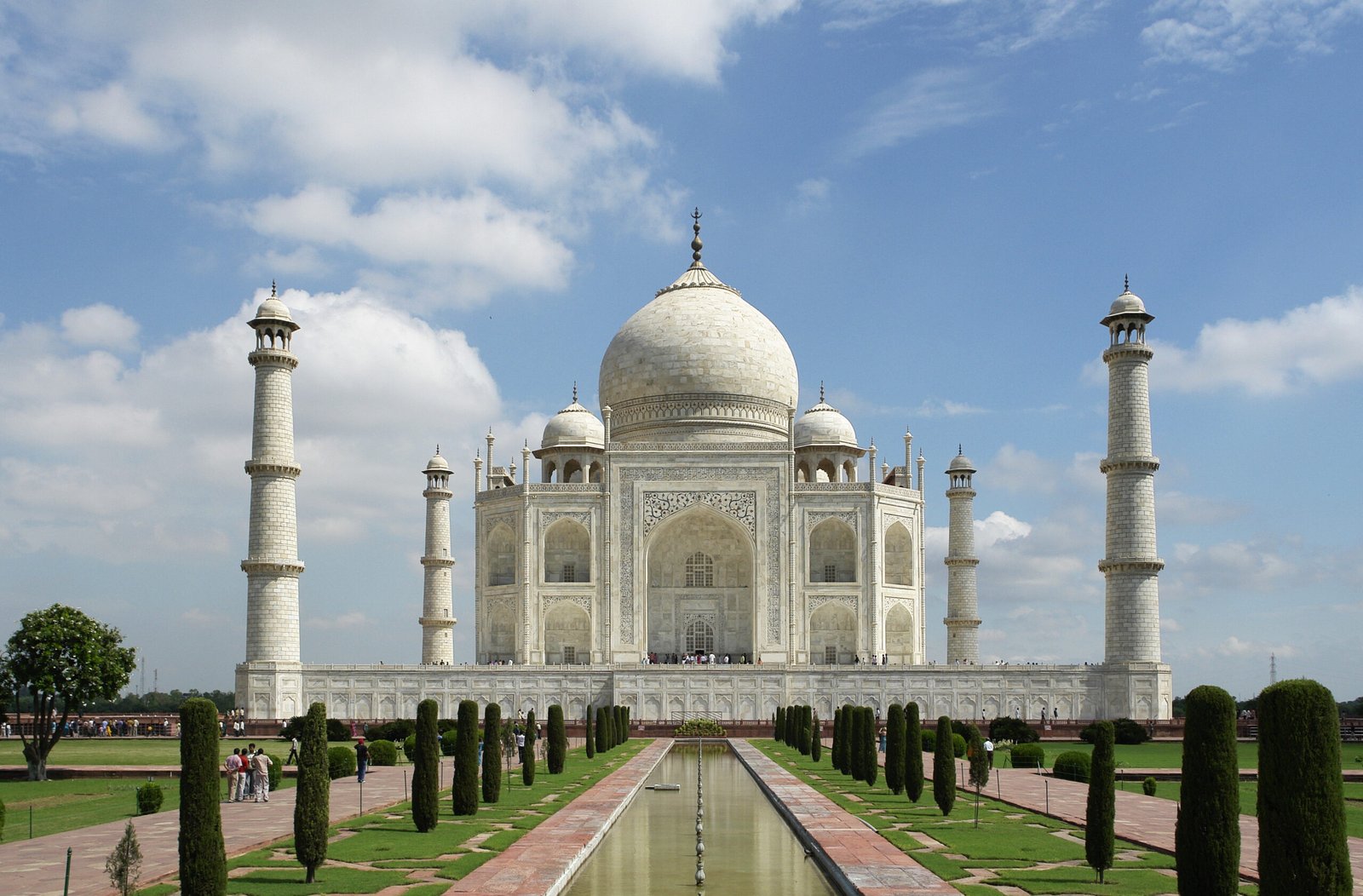
No list of famous monuments in India can begin anywhere else. The Taj Mahal draws admirers from every corner of the globe. It rises on the southern bank of the Yamuna River in Agra.
The Story Behind the Taj Mahal
Mughal emperor Shah Jahan commissioned the Taj Mahal after his wife, Mumtaz Mahal, died in 1631. Work began soon after, and thousands of artisans laboured for many years. Craftsmen arrived from across India, Persia and Central Asia. Together, they created a tomb that symbolises eternal love.
Later, Shah Jahan’s own son, Aurangzeb, imprisoned him in Agra Fort. From there, the ageing emperor could still gaze at the Taj across the river. Today, both husband and wife rest inside the main chamber.
Architecture That Changes With the Light
The builders used gleaming white Makrana marble from Rajasthan. Artisans inlaid it with semi-precious stones using a technique that craftsmen call pietra dura. Additionally, calligraphy from the Quran frames the grand arches.
The design follows perfect symmetry. Four minarets stand at the corners, and each leans slightly outward. This clever detail would protect the tomb if an earthquake ever struck. Meanwhile, the charbagh garden divides the grounds into four equal parts.
Most remarkably, the marble shifts colour through the day. It glows soft pink at dawn and dazzling white at noon. By moonlight, it takes on a silvery, almost dreamlike tone.
Visiting Tips for the Taj Mahal
- Arrive at sunrise for softer light and thinner crowds.
- Remember the Friday closure, as the monument shuts for prayers.
- Check full moon viewing dates if you want a night visit.
- Carry minimal belongings, because security restricts many items.
- Visit Mehtab Bagh across the river for a peaceful sunset view.
Expert Tip: Book a stay with a view of the Taj if you can. Watching the dome change colour from your balcony feels truly unforgettable.
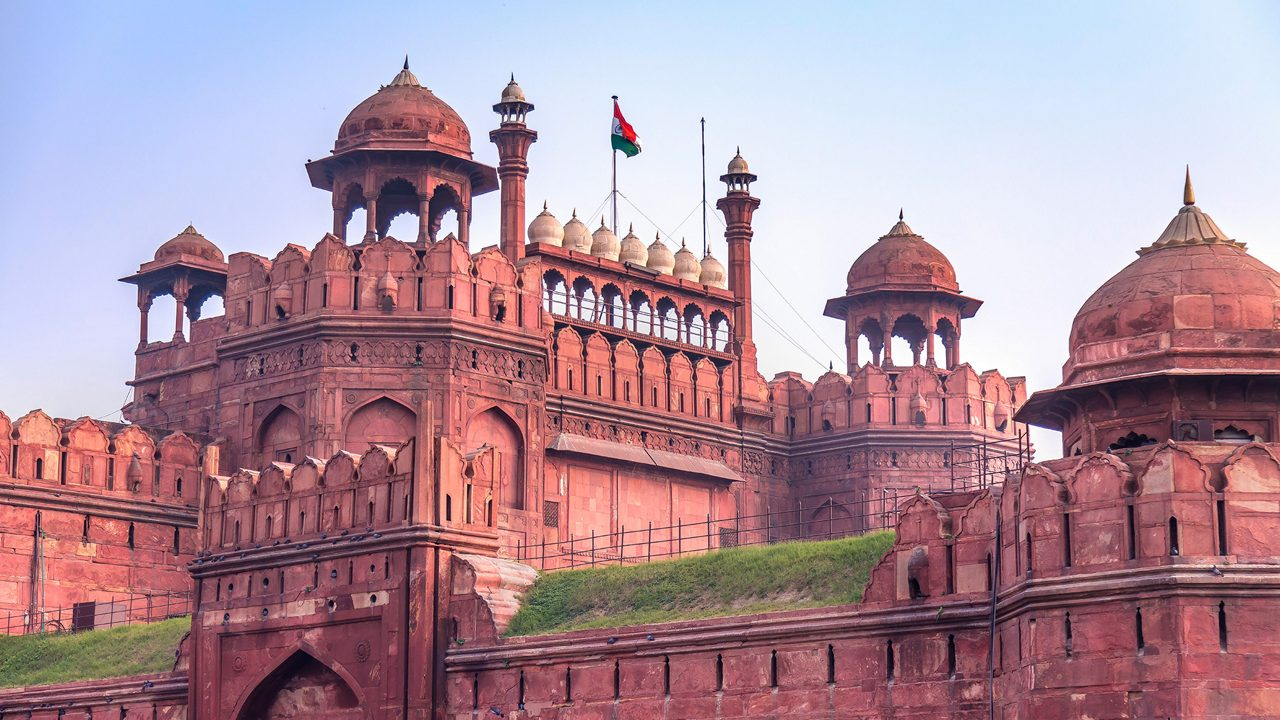
Red Fort, Delhi
Shah Jahan also gave Delhi its most powerful symbol. The Red Fort, or Lal Qila, served as the main Mughal residence for nearly two centuries. Moreover, its massive red sandstone walls stretch for more than two kilometres.
A Fort at the Heart of the Nation
Construction began in 1639 when Shah Jahan shifted his capital from Agra to Delhi. He named the new city Shahjahanabad. Within the fort walls, emperors held court, celebrated festivals and received foreign envoys.
Importantly, the Red Fort carries deep meaning for modern India. Every year on Independence Day, the Prime Minister hoists the national flag from its ramparts. Therefore, the fort links the Mughal past with the democratic present.
Highlights Inside the Walls
- Lahori Gate, the grand main entrance facing west.
- Diwan-i-Aam, the hall where emperors met ordinary citizens.
- Diwan-i-Khas, the private audience hall once home to the Peacock Throne.
- Rang Mahal, a palace for royal women with a central water channel.
- Moti Masjid, a small pearl-white mosque that Aurangzeb added.
UNESCO inscribed the Red Fort Complex in 2007. Afterwards, conservation teams restored many of its gardens and pavilions. Today, an evening sound-and-light show narrates its long history.
Expert Tip: Combine the Red Fort with a walk through Chandni Chowk. The old bazaar sits just outside the gates and offers legendary street food.
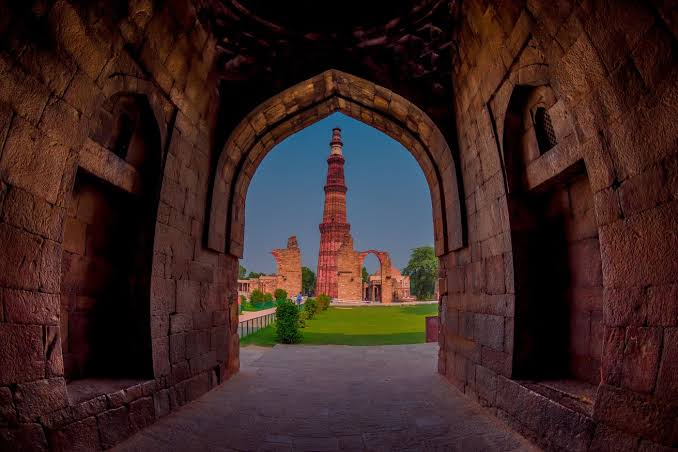
Qutub Minar, Delhi
The Qutub Minar soars above south Delhi’s Mehrauli district. At roughly 72.5 metres, it remains the world’s tallest brick minaret. Meanwhile, its fluted red and buff sandstone storeys narrow gracefully towards the top.
Centuries in the Making
Qutb-ud-din Aibak, founder of the Delhi Sultanate, started the tower around 1199. However, he completed only the first storey. His successor, Iltutmish, added three more levels. Later, Firoz Shah Tughlaq repaired lightning damage and built the fifth storey in marble.
Consequently, the minar displays a fascinating mix of styles. Each ruler left a subtle signature in its bands of carving. Verses from the Quran wrap around the tower in elegant calligraphy.
More Than a Single Tower
The Qutub complex holds several other treasures:
- Quwwat-ul-Islam Mosque, among the earliest mosques in India.
- The Iron Pillar, which has resisted rust for around sixteen centuries.
- Alai Darwaza, a beautiful gateway with early true arches.
- Alai Minar, an unfinished tower that Alauddin Khalji hoped would double the Qutub’s height.
The Iron Pillar fascinates scientists even today. Metallurgists credit its high phosphorus content and a protective surface layer. Meanwhile, visitors simply marvel at its smooth, ancient surface.
UNESCO added the complex to its World Heritage List in 1993. Visitors can no longer climb the tower, but the grounds offer plenty to explore.
Humayun’s Tomb, Delhi
Many travellers call Humayun’s Tomb the elder sibling of the Taj Mahal. Indeed, it inspired many features that Shah Jahan’s architects later perfected. It stands in a serene garden in the Nizamuddin area.
A Widow’s Tribute
Empress Bega Begum commissioned the tomb for her husband, Emperor Humayun, in the 1560s. She chose a Persian architect, Mirak Mirza Ghiyas, to lead the work. Together, they created India’s first grand garden tomb.
The structure introduced the charbagh layout on a monumental scale. Four quarters of garden surround the tomb, and water channels divide them. Furthermore, the double dome gave the building a lofty silhouette.
Why You Should Not Skip It
Humayun’s Tomb often feels calmer than other Delhi landmarks. Its red sandstone and white marble create a warm, harmonious palette. Additionally, recent restoration revived its gardens, fountains and decorative tiles.
The complex also holds more than a hundred graves of Mughal family members. For this reason, historians sometimes call it the dormitory of the Mughals. UNESCO recognised the site in 1993.
Expert Tip: Visit in the late afternoon. The setting sun turns the sandstone a deep, glowing amber, which makes for stunning photographs.
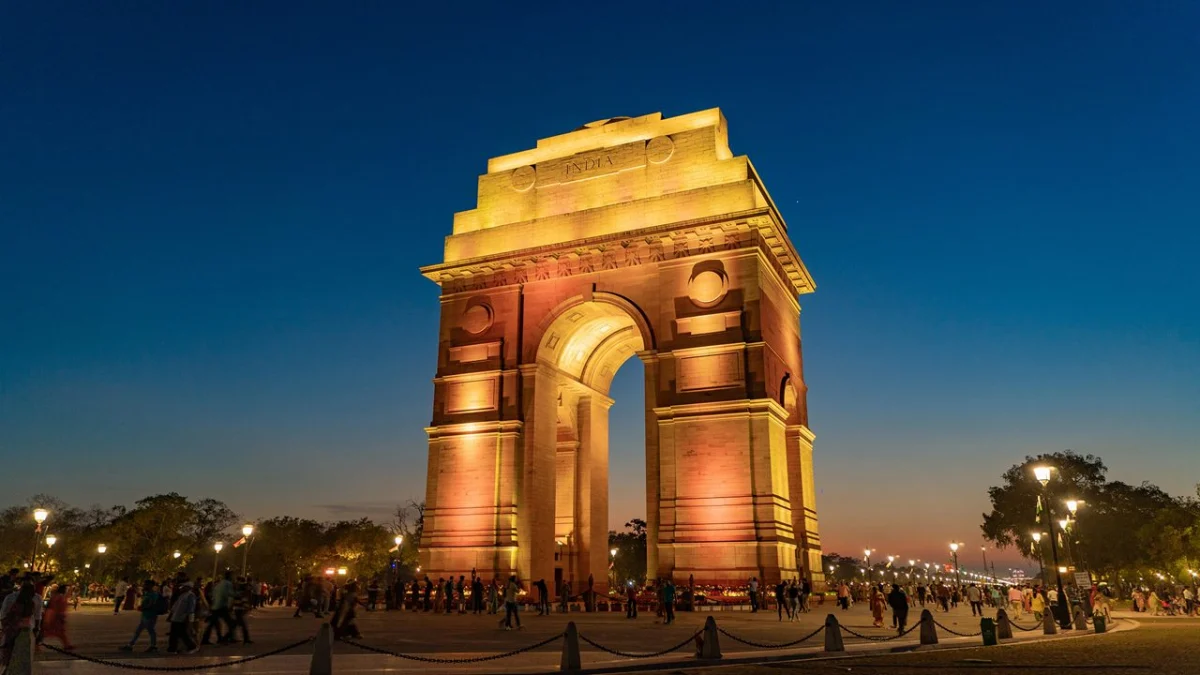
India Gate, Delhi
India Gate anchors the ceremonial heart of New Delhi. This 42-metre war memorial honours Indian soldiers who died during the First World War. Their names line the walls of the arch.
Notably, the renowned British architect Sir Edwin Lutyens designed the memorial. In fact, he drew inspiration from classical triumphal arches like the Arc de Triomphe. The structure opened in 1931.
Today, India Gate sits along Kartavya Path, the grand avenue leading to Rashtrapati Bhavan. Nearby, the National War Memorial honours soldiers who fell after independence. In 2022, the eternal Amar Jawan Jyoti flame merged with the flame at this newer memorial.
In the evenings, families gather on the lawns around the arch. Ice cream vendors, balloon sellers and soft lighting create a festive mood. Therefore, India Gate offers a relaxed contrast to Delhi’s busier monuments.
Fatehpur Sikri, Uttar Pradesh
Just a short drive from Agra, Fatehpur Sikri feels like a city frozen in time. Emperor Akbar founded it in the 1570s as his new capital. However, the court abandoned it after roughly fourteen years.
The Rise and Fall of a Royal City
Akbar chose Sikri to honour the Sufi saint Salim Chishti. The saint had blessed the emperor with a long-awaited son. Grateful, Akbar raised palaces, courtyards and a vast mosque on the rocky ridge.
Historians still debate why the court left so quickly. Many point to water shortages, while others cite political needs in the northwest. Either way, the city’s emptiness helped preserve its buildings remarkably well.
Must-See Structures
- Buland Darwaza, a towering gateway that celebrates Akbar’s victory in Gujarat.
- Jama Masjid, one of the largest mosques of its era.
- Tomb of Salim Chishti, with delicate white marble lattice screens.
- Panch Mahal, a five-storey open pavilion that catches cool breezes.
- Diwan-i-Khas, famous for its carved central pillar.
UNESCO inscribed Fatehpur Sikri in 1986. Visitors often tie threads on the saint’s tomb screens while making a wish.
Golden Temple, Amritsar
The Harmandir Sahib, which most people call the Golden Temple, stands among the holiest sites in Sikhism. It shimmers in the middle of a sacred pool, the Amrit Sarovar. Pilgrims and travellers of every faith receive a warm welcome.
Sri Arjan Dev Ji, the fifth Sikh spiritual leader, completed the temple in 1604. Later, Maharaja Ranjit Singh covered its upper storeys in gilded copper. That shining finish gave the shrine its popular name.
What Makes the Experience Unique
Symbolically, the temple has four entrances, one on each side. This design symbolises openness to people from all directions and backgrounds. Furthermore, the community kitchen, or langar, serves free meals to tens of thousands daily.
Meanwhile, volunteers cook, serve and clean with quiet devotion. Sitting on the floor and sharing a simple meal feels deeply humbling. All the while, hymns from the Sikh holy scripture echo across the water.
Expert Tip: Visit twice if you can. Come once in daylight, then return after dark when the golden shrine glows on the still water.
Famous Monuments in India: Rajasthan’s Forts and Palaces
Rajasthan brings colour, romance and royal grandeur to any heritage itinerary. Its Rajput rulers built mighty forts on hilltops and elegant palaces in their capitals. In 2013, UNESCO grouped six of them as the Hill Forts of Rajasthan.
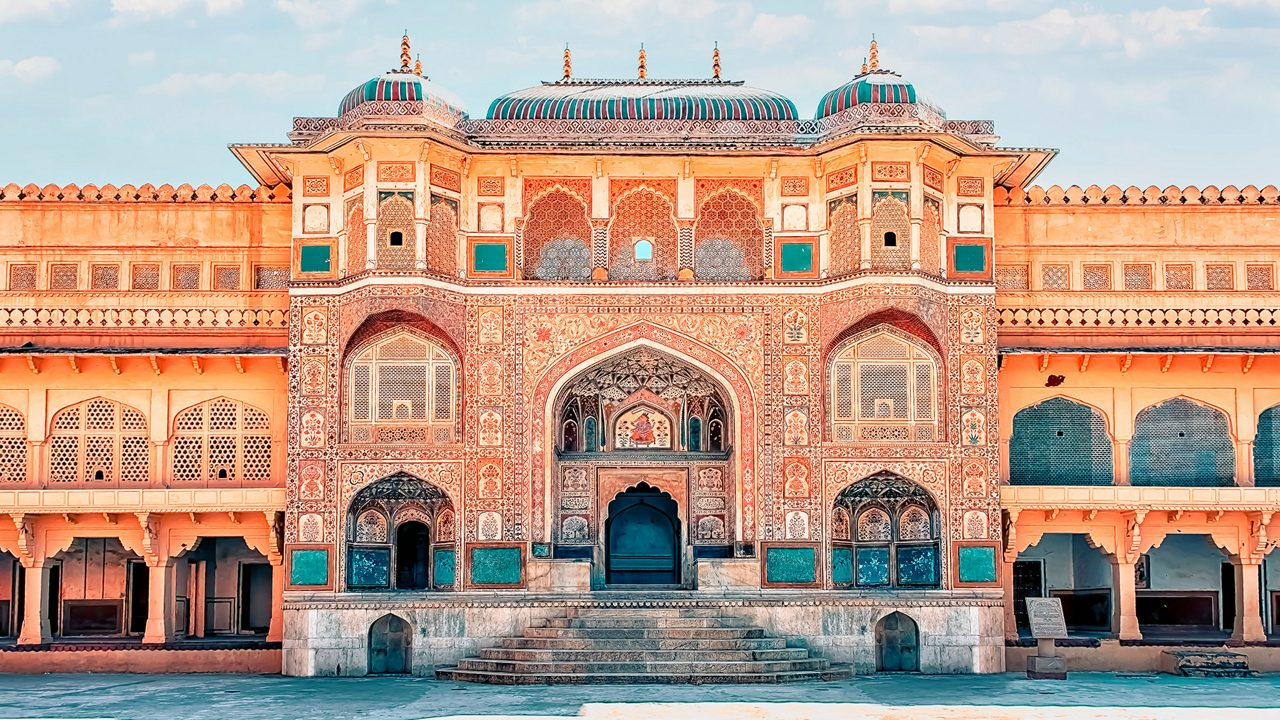
Amber Fort, Jaipur
Amber Fort, also spelt Amer, crowns a hill just outside Jaipur. Raja Man Singh I began the present fort in the late sixteenth century. His successors expanded it over the following generations.
Below, the fort overlooks the calm Maota Lake, which reflects its honey-coloured walls. Visitors climb through a series of gates and courtyards. Each level reveals more intricate decoration than the last.
Highlights of Amber Fort
- Sheesh Mahal, the Mirror Palace, where a single flame lights thousands of tiny mirrors.
- Ganesh Pol, a richly painted gateway leading to private quarters.
- Diwan-i-Aam, an open hall with elegant double columns.
- Sukh Niwas, where water channels once cooled the rooms naturally.
Additionally, a long fortified wall links Amber to Jaigarh Fort above. Jaigarh holds Jaiwana, among the largest cannons on wheels from its era.
Expert Tip: Reach Amber Fort right at opening time. The morning light warms the sandstone beautifully, and tour groups arrive later.
Hawa Mahal, Jaipur
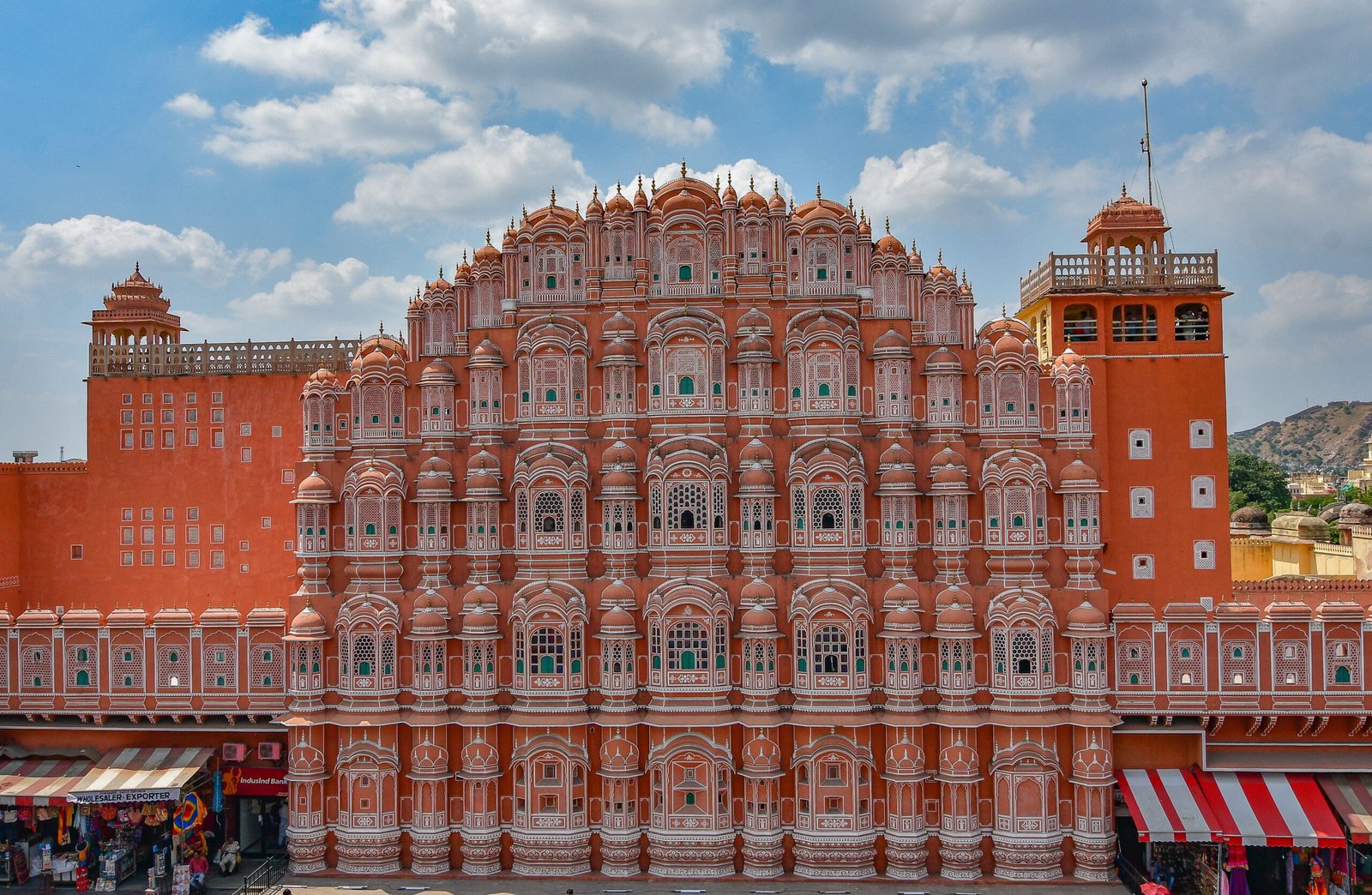
The Hawa Mahal, or Palace of Winds, ranks among Jaipur’s most recognisable sights. Maharaja Sawai Pratap Singh commissioned it in 1799. Architect Lal Chand Ustad shaped its honeycomb façade.
Interestingly, the building’s shape resembles the crown of Lord Krishna. Furthermore, its pink sandstone front holds 953 small windows, or jharokhas. Royal women once watched street festivals through these latticed screens without public view.
Beyond beauty, the design also served a practical purpose. Breezes flowed through the windows and kept the interior pleasantly cool. Hence, the name Palace of Winds feels entirely fitting.
Surprisingly, the Hawa Mahal is only a narrow structure, just one room deep in places. Visitors enter from the rear and climb ramps to the upper levels. From the top, you can enjoy sweeping views of the old city and the Jantar Mantar observatory.
Mehrangarh Fort, Jodhpur
Mehrangarh Fort towers over Jodhpur from a rocky outcrop about 120 metres high. Rao Jodha founded it in 1459 when he established his new capital. Its massive walls seem to grow straight out of the cliff.
Once inside, the fort reveals delicate palaces with fine latticework and painted ceilings. Moti Mahal, Phool Mahal and Sheesh Mahal showcase Rajput artistry at its finest. Furthermore, a superb museum displays palanquins, armour, textiles and miniature paintings.
Then, from the ramparts, the old city spreads below in shades of blue. That view explains Jodhpur’s nickname, the Blue City. Many travellers rank Mehrangarh as the best-presented fort in India.
Jaisalmer Fort, Jaisalmer
Jaisalmer Fort rises from the Thar Desert like a golden mirage. Rawal Jaisal founded it in 1156. Locals call it Sonar Quila, the Golden Fort, because its yellow sandstone glows at sunset.
Unlike most forts, Jaisalmer remains a living fort. Families still live inside its walls, alongside temples, shops and guesthouses. Consequently, wandering its lanes feels like stepping into a medieval town.
Additionally, the ornate havelis nearby of wealthy merchants display astonishing stone carving. Patwon ki Haveli and Salim Singh ki Haveli deserve particular attention.
Chittorgarh Fort, Chittorgarh
Chittorgarh Fort ranks among the largest forts in India. It sprawls across a plateau and encloses palaces, temples, towers and reservoirs. Above all, it embodies the courage and sacrifice of the Rajputs.
Moreover, the fort carries legends of Rani Padmini, Rana Kumbha and Maharana Pratap. Rana Kumbha raised the striking Vijay Stambha, or Tower of Victory, in the fifteenth century. Its nine storeys carry carvings of Hindu deities from base to summit.
Nearby, the older Kirti Stambha honours the Jain tradition. Together, these towers make Chittorgarh a powerful stop for history lovers.
Famous Monuments in India: The Western Region
Western India combines ancient rock-cut wonders with colonial-era landmarks. Maharashtra and Gujarat, in particular, offer some of the most diverse heritage in the country.
Gateway of India, Mumbai
The Gateway of India faces the Arabian Sea on Mumbai’s waterfront. Builders raised it to commemorate the 1911 visit of King George V and Queen Mary. Architect George Wittet designed it in the Indo-Saracenic style, and work finished in 1924.
Structurally, the arch uses yellow basalt and reinforced concrete. Its design blends Hindu and Islamic elements with Roman triumphal forms. Fittingly, the last British troops left India through this very gateway in 1948.
Today, therefore, the Gateway serves as a lively meeting point. Ferries depart from here for Elephanta Island. Meanwhile, the iconic Taj Mahal Palace hotel stands just across the road.
Expert Tip: Visit at dawn for a quiet harbour view. By evening, the promenade fills with families, photographers and street vendors.
Ajanta and Ellora Caves, Maharashtra
The Ajanta and Ellora Caves represent some of the finest rock-cut art anywhere on Earth. Both sites lie near Aurangabad, now Chhatrapati Sambhajinagar. UNESCO inscribed them in 1983.
Ajanta: A Gallery of Ancient Paintings
Buddhist monks began carving the Ajanta Caves around the second century BCE. Work continued in a second phase during the fifth century CE. Around thirty caves curve along a horseshoe-shaped gorge above the Waghora River.
Above all, Ajanta’s murals remain its greatest treasure. They depict the Jataka tales, which describe the Buddha’s earlier lives. Moreover, the paintings show royal courts, dancers and everyday scenes with remarkable detail. A British hunting party rediscovered the caves in 1819.
Ellora: Three Faiths Side by Side
Ellora holds thirty-four caves that span Buddhist, Hindu and Jain traditions. This peaceful coexistence makes the site truly special. Craftsmen worked here between roughly the sixth and tenth centuries.
However, the undisputed highlight remains the Kailasa Temple, or Cave 16. Rashtrakuta king Krishna I sponsored it in the eighth century. Remarkably, artisans carved the entire temple from a single rock, working from the top downward.
Expert Tip: Plan separate days for Ajanta and Ellora. Note that Ajanta usually closes on Mondays, while Ellora closes on Tuesdays.
Elephanta Caves, Mumbai
A short ferry ride from the Gateway of India brings you to the Elephanta Caves. These rock-cut shrines honour Lord Shiva and date to roughly the fifth and sixth centuries.
Without doubt, the star attraction remains the Trimurti, a towering three-faced sculpture of Shiva. It represents the god as creator, preserver and destroyer. Additionally, panels show Shiva’s marriage, his cosmic dance and the descent of the Ganga.
The island takes its name from a large stone elephant that Portuguese sailors found there. UNESCO recognised the caves in 1987.
Rani ki Vav, Patan
Rani ki Vav, the Queen’s Stepwell, ranks among the most beautiful stepwells in India. Queen Udayamati commissioned it in the eleventh century to honour her husband, King Bhima I.
In total, the stepwell descends seven levels into the earth. More than five hundred major sculptures line its walls. They depict Vishnu’s avatars, celestial dancers and scenes of daily life.
For centuries, silt from the Saraswati River buried the stepwell almost completely. That burial, however, protected its carvings. Restoration teams later uncovered it, and UNESCO inscribed it in 2014.
Statue of Unity, Ekta Nagar
Not every famous landmark is ancient. The Statue of Unity honours Sardar Vallabhbhai Patel, the leader who united India’s princely states. At 182 metres, it remains the world’s tallest statue.
The statue opened in 2018 near the Sardar Sarovar Dam on the Narmada River. A viewing gallery inside the chest offers panoramic views of the surrounding hills. Moreover, gardens, a valley of flowers and evening light shows make it a full-day destination.
Ready to Plan Your Vacations/Holidays?
Reach out to Delta Smart World’s team of destination specialists today!
Famous Monuments in India: The Eastern Region
Eastern India blends colonial elegance with some of the subcontinent’s most extraordinary temple architecture.
Victoria Memorial, Kolkata
The Victoria Memorial dominates Kolkata’s green Maidan. Lord Curzon conceived it as a tribute to Queen Victoria after her death in 1901. Architect Sir William Emerson designed it, and it opened in 1921.
Like the Taj Mahal, it uses gleaming white Makrana marble. Stylistically, it blends British and Mughal elements with Venetian and Egyptian touches. A bronze Angel of Victory crowns the central dome.
Additionally, a museum inside displays paintings, manuscripts and artefacts from colonial history. Furthermore, the surrounding gardens offer a peaceful escape from the busy city. In the evening, soft lighting turns the memorial into a glowing landmark.
Konark Sun Temple, Odisha
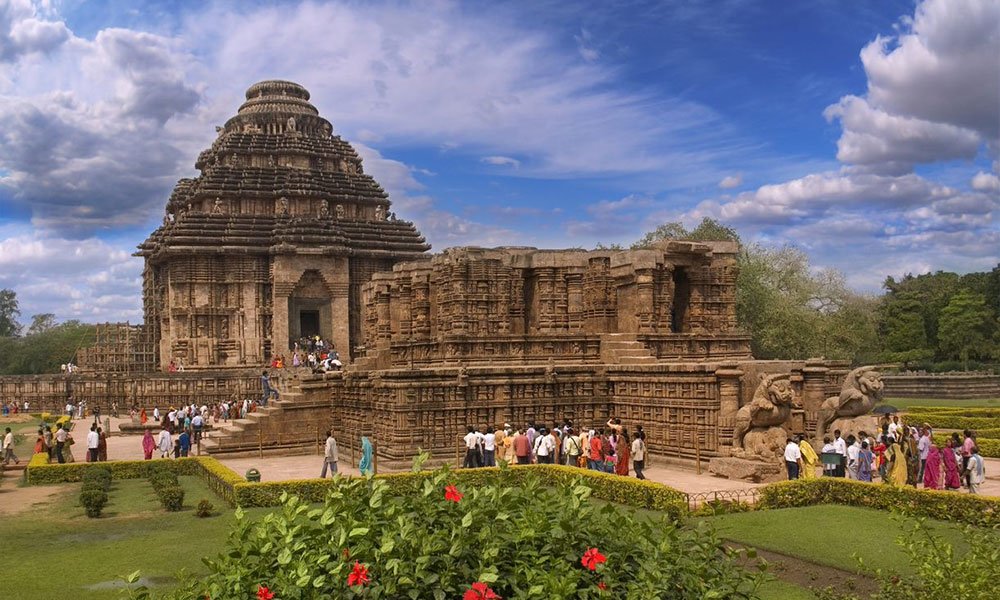
The Konark Sun Temple stands near the Bay of Bengal in Odisha. King Narasimhadeva I of the Eastern Ganga dynasty commissioned it in the thirteenth century. It honours Surya, the Sun God.
A Chariot Carved in Stone
Essentially, the temple takes the form of a colossal stone chariot. Twenty-four intricately carved wheels line its base. Seven sculpted horses appear to pull it towards the rising sun.
Cleverly, each wheel also works as a sundial. Shadows from its spokes can tell the time with impressive accuracy. Meanwhile, carvings of musicians, dancers, animals and daily life cover nearly every surface.
The Black Pagoda
European sailors once called Konark the Black Pagoda. Its dark tower served as a navigation landmark for ships along the coast. Sadly, the main sanctum tower collapsed long ago. Nevertheless, the surviving audience hall still impresses every visitor.
UNESCO inscribed the temple in 1984. Each December, the Konark Dance Festival brings classical performers to the temple grounds.
Expert Tip: Combine Konark with Puri and Bhubaneswar. Together, they form Odisha’s famous Golden Triangle of temple towns.
Famous Monuments in India: The Central Heartland
Madhya Pradesh sits at the geographical heart of India. It also holds some of the country’s most significant ancient monuments.
Khajuraho Temples, Madhya Pradesh
The Khajuraho Group of Monuments showcases medieval temple art at its most refined. The Chandela dynasty raised these temples between roughly 950 and 1050 CE. Originally, the site held around eighty-five temples, and about two dozen survive today.
Art That Celebrates Life
Khajuraho’s sculptures depict gods, warriors, musicians, dancers and lovers. A small share of carvings show sensual themes, which attract much attention. However, most sculptures celebrate everyday life, devotion and celestial beings.
The Kandariya Mahadeva Temple stands as the grandest example. Its rising spires imitate the peaks of the Himalayas. Furthermore, Hindu and Jain temples share the site peacefully.
Local villagers protected the temples for centuries after the Chandelas declined. A British surveyor brought them to wider attention in the 1830s. UNESCO inscribed the site in 1986.
Expert Tip: Visit in February for the Khajuraho Dance Festival. Classical dancers perform against the floodlit temples, creating a magical evening.
Sanchi Stupa, Madhya Pradesh
The Great Stupa at Sanchi ranks among the oldest stone structures in India. Emperor Ashoka commissioned the original stupa in the third century BCE. It enshrined relics of the Buddha.
Later rulers enlarged the stupa and added four ornate gateways, or toranas. These gateways carry detailed carvings of the Buddha’s life and the Jataka tales. Interestingly, the artists never show the Buddha in human form. Instead, they use symbols like footprints, an empty throne or a Bodhi tree.
Besides the stupa, the hilltop site also holds monasteries, temples and smaller stupas. Sanchi feels calm and contemplative, which suits its spiritual heritage. UNESCO inscribed it in 1989.
Ready to Plan Your Vacations/Holidays?
Reach out to Delta Smart World’s team of destination specialists today!
Famous Monuments in India: The Southern Treasures
South India offers a completely different architectural language. Here, towering gateways, granite temples and royal palaces dominate the landscape. Furthermore, many southern temples remain active places of worship.
Charminar, Hyderabad
The Charminar rises at the heart of Hyderabad’s old city. Muhammad Quli Qutb Shah commissioned it in 1591, shortly after founding the city. Many historians link it to the end of a deadly plague.
At its base, the monument has four grand arches facing the four directions. Above them, four slender minarets rise to around 56 metres. A small mosque occupies the top floor.
Meanwhile, around the Charminar, bustling bazaars sell bangles, pearls and fragrant attar. Laad Bazaar shines with colourful lacquer bangles. Meanwhile, nearby eateries serve the city’s famous biryani and haleem.
Golconda Fort, Hyderabad
A short drive from Charminar brings you to Golconda Fort. The Qutb Shahi dynasty transformed it into a mighty stronghold in the sixteenth century. The region around Golconda once produced legendary diamonds, including the Koh-i-Noor.
Above all, the fort’s acoustic design amazes visitors. A handclap at the entrance gate carries all the way to the hilltop pavilion. Guards once used this system to warn of approaching danger.
Afterwards, climb to the summit for sweeping views of Hyderabad. Then stay for the evening sound-and-light show.
Mysore Palace, Karnataka
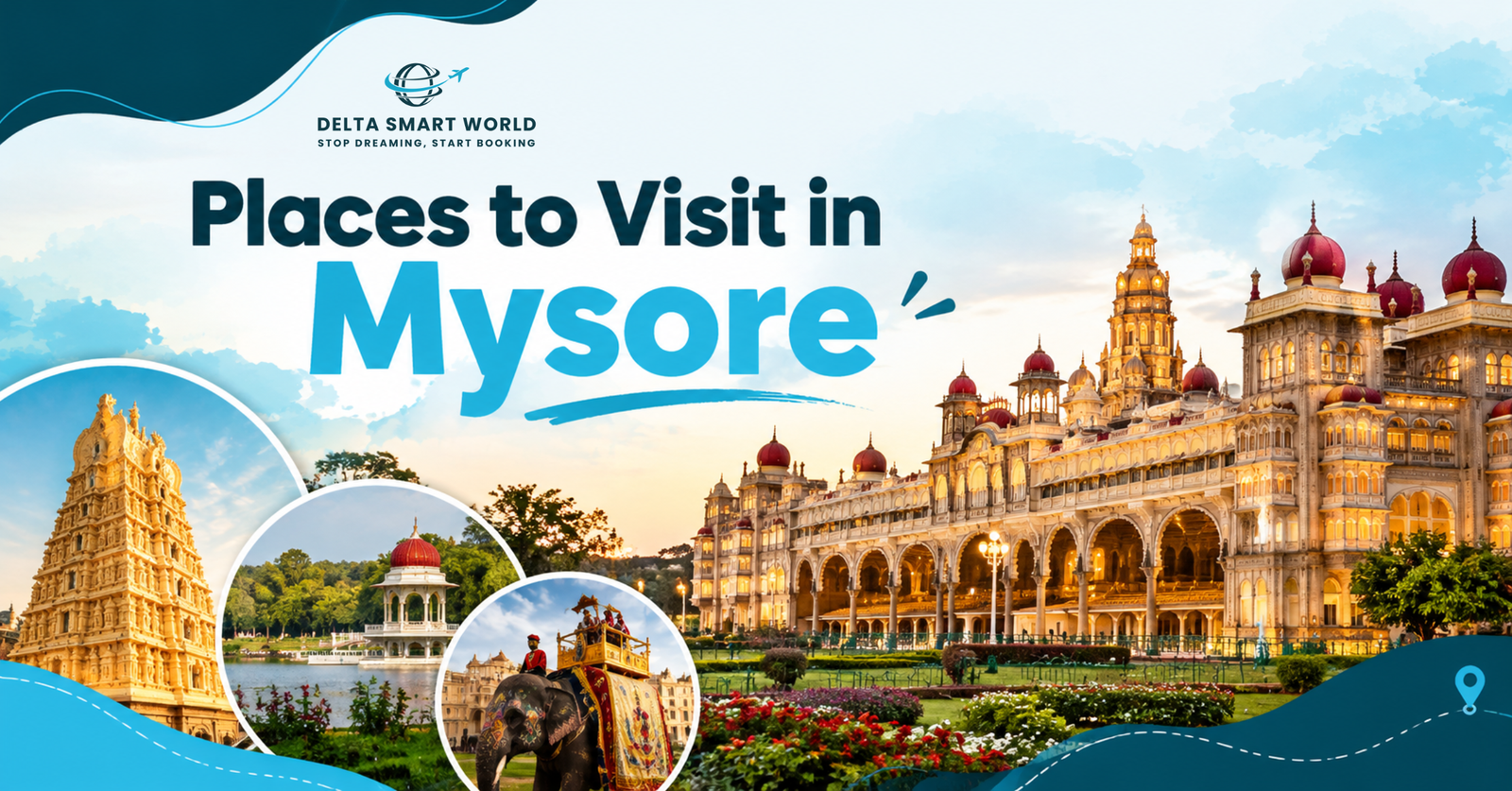
Mysore Palace serves as the grand seat of the Wodeyar dynasty. The present palace replaced an older wooden structure that fire destroyed in 1897. British architect Henry Irwin designed the new building, which the royal family completed in 1912.
Architecturally, the palace blends Indo-Saracenic, Hindu, Mughal and Gothic styles. Its interiors dazzle with stained glass, carved doors and mosaic floors. The Durbar Hall and the Kalyana Mantapa stand out as particular highlights.
On Sunday evenings and festival nights, nearly a hundred thousand bulbs illuminate the palace. The effect looks spectacular during the Mysuru Dasara festival in autumn.
Expert Tip: Time your visit for a Sunday evening. Watching the palace light up all at once is a moment you won’t forget.
Hampi, Karnataka
Hampi sits among giant granite boulders along the Tungabhadra River. It once served as the capital of the mighty Vijayanagara Empire. During the fifteenth and sixteenth centuries, travellers described it as one of the world’s richest cities.
Rise and Ruin of a Great Capital
King Krishnadevaraya led the empire at its peak. He sponsored grand temples, markets and water systems. However, an alliance of Deccan sultanates defeated the empire in 1565. Afterwards, invaders sacked the city, and it never recovered.
Highlights of Hampi
- Virupaksha Temple, still an active shrine with a towering gopuram.
- Vittala Temple, home to the iconic stone chariot.
- Musical pillars, which produce notes when tapped gently.
- Lotus Mahal, an elegant pavilion in the royal enclosure.
- Elephant Stables, a striking row of domed chambers.
- Hemakuta Hill, perfect for sunrise and sunset views.
UNESCO inscribed Hampi in 1986. Its ruins spread across a vast area, so plan at least two full days.
Expert Tip: Hire a local guide or rent a bicycle. Many lesser-known shrines hide between boulders that tour buses never reach.
Brihadeeswarar Temple, Thanjavur
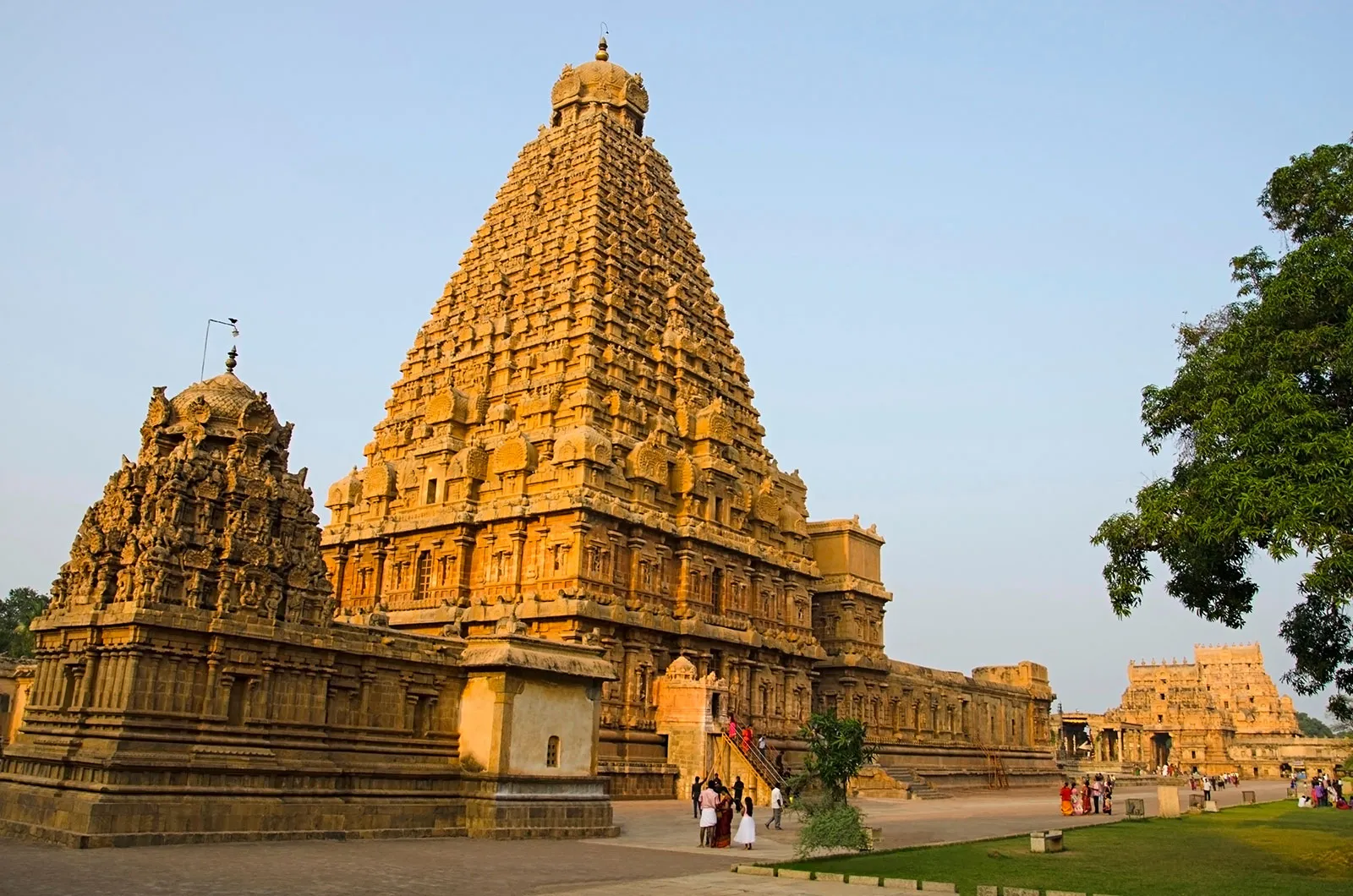
The Brihadeeswarar Temple showcases the genius of the Chola dynasty. Rajaraja Chola I completed it in 1010 CE. Locals also call it the Big Temple.
Even today, its granite vimana, or tower, soars to around 66 metres. A massive capstone crowns the summit. Historians still debate exactly how Chola engineers raised it so high.
Inside, a giant monolithic Nandi faces the main shrine. Furthermore, Chola-era frescoes and inscriptions line the inner walls. These records describe the temple’s staff, rituals and donations in remarkable detail.
UNESCO lists the temple among the Great Living Chola Temples. Importantly, worship continues here every day, as it has for more than a thousand years.
Meenakshi Amman Temple, Madurai
The Meenakshi Amman Temple forms the spiritual heart of Madurai. It honours Goddess Meenakshi and her consort, Sundareswarar, a form of Shiva. The present complex largely reflects work by the Nayak rulers.
Today, fourteen towering gopurams rise above the temple walls. Thousands of brightly painted figures of gods, demons and animals cover each one. Additionally, the Hall of a Thousand Pillars displays exceptional stone carving.
Similarly, every evening, priests carry Sundareswarar’s image to Meenakshi’s shrine in a joyful procession. Witnessing this ritual offers a rare glimpse into living temple traditions.
Shore Temple, Mahabalipuram
The Shore Temple stands right beside the Bay of Bengal. The Pallava king Narasimhavarman II commissioned it in the early eighth century. It ranks among the oldest structural stone temples in South India.
Beyond the temple, Mahabalipuram holds many more Pallava treasures. The Pancha Rathas feature five monolithic shrines. Meanwhile, Arjuna’s Penance covers a giant rock face with hundreds of carved figures.
UNESCO inscribed the Group of Monuments at Mahabalipuram in 1984. The site lies an easy drive from Chennai.
Your Questions About Visiting Famous Monuments in India
Planning a heritage trip raises many practical questions. Here, we answer the most common ones in quick, scannable sections.
Which Famous Monument in India Should First-Time Visitors See?
Start with the Taj Mahal. It delivers an emotional, unforgettable first impression. Moreover, Agra sits within easy reach of Delhi and Jaipur. That trio forms the popular Golden Triangle, which covers several headline monuments in under a week.
When Is the Best Time to Visit?
For most regions, October to March offers the most comfortable weather. Days feel pleasant, and skies stay clear for photography. However, desert forts in Rajasthan get very hot from April onward. Meanwhile, the monsoon brings lush greenery but occasional travel delays.
How Many Days Do You Need?
That depends on your chosen circuit. Here is a simple guide:
- Golden Triangle (Delhi, Agra, Jaipur): five to seven days.
- Rajasthan forts circuit: eight to twelve days.
- Maharashtra caves and Mumbai: four to six days.
- Odisha temple trail: three to four days.
- Karnataka heritage (Mysore and Hampi): five to seven days.
- Tamil Nadu temple circuit: six to eight days.
Can You Combine Monuments With Relaxation?
Absolutely. In fact, we recommend it. Heritage sightseeing involves early starts, long walks and plenty of sun. Therefore, a comfortable resort between sightseeing days helps you recharge properly.
Ready to Plan Your Vacations/Holidays?
Reach out to Delta Smart World’s team of destination specialists today!
Planning Heritage Circuits Around Famous Monuments in India
Grouping monuments into circuits saves travel time and reduces fatigue. Below, we outline four routes that our team often recommends to members.
The Golden Triangle
This classic route links Delhi, Agra and Jaipur. In Delhi, it covers the Red Fort, Qutub Minar, Humayun’s Tomb and India Gate. Then it adds the Taj Mahal, Fatehpur Sikri, Amber Fort and Hawa Mahal. Furthermore, smooth expressways connect all three cities.
The Royal Rajasthan Trail
Start in Jaipur and continue to Jodhpur, Jaisalmer and Udaipur. Add Chittorgarh for a deeper look at Rajput history. This route works beautifully for travellers who love palaces, deserts and vibrant culture.
The Deccan Heritage Loop
Begin in Hyderabad with Charminar and Golconda. Then head west to Hampi, and finish in Mysore. Alternatively, start in Mumbai and visit Elephanta, Ajanta and Ellora instead.
The Southern Temple Trail
Fly into Chennai and visit Mahabalipuram first. Next, travel south to Thanjavur and finish at Madurai. This route reveals the full splendour of Dravidian architecture.
Expert Tip: Always build one free day into any heritage circuit. It gives you flexibility for weather, festivals or a monument you simply want to revisit.
How to Experience Famous Monuments in India Responsibly
Every visitor plays a part in protecting India’s heritage. Small, thoughtful choices make a real difference. Here are practical guidelines we share with every member.
Respect Sacred Spaces
Many famous monuments in India remain active places of worship. Therefore, dress modestly and cover your shoulders and knees. Remove your shoes where signs ask you to. At gurdwaras, cover your head with a scarf or the cloths that volunteers provide.
Protect the Monuments
- Never touch carvings or murals, as skin oils damage ancient surfaces.
- Avoid flash photography in caves and painted interiors.
- Stay on marked paths to protect fragile floors and gardens.
- Carry your litter out, or use the bins on site.
- Follow drone rules, since most protected sites prohibit drones.
Hire Licensed Guides
Firstly, licensed guides bring monuments to life with stories and context. Moreover, they support local livelihoods directly. Ask for official identification at the ticket counter or through your hotel.
Support Local Artisans
Many monument towns keep traditional crafts alive. Agra’s artisans still practise marble inlay work. Similarly, Jaipur offers block prints, and Hampi has stone carvers. Buying directly from these craftspeople helps sustain heritage beyond the monuments themselves.
Practical Comfort Tips
- Wear comfortable walking shoes, because most sites involve uneven ground.
- Carry water and sun protection, especially at open forts and ruins.
- Start early to beat both heat and crowds.
- Check weekly closure days before you set out.
- Keep digital tickets ready, as many ASI sites now support online booking.
Pairing Famous Monuments in India With Luxury Stays
Heritage travel can feel demanding. Long drives, early mornings and crowded sites quickly drain your energy. That is precisely where thoughtful accommodation transforms the experience.
Why Your Stay Matters
After all, a great hotel does more than offer a bed. It provides calm after a busy day, local insight and genuine hospitality. Moreover, the right location can save hours of travel. Imagine waking up with a view of a fort or the sea after exploring ancient ruins.
The Delta Smart World Approach
At Delta Smart World, our team travels extensively across India and beyond. We personally visit hotels, resorts and villas near the country’s greatest heritage destinations. Then, we evaluate each property against carefully defined standards before welcoming our members.
In particular, we look closely at comfort, service, cleanliness, location and overall experience. As a result, members can explore famous monuments in India and return to accommodation they truly trust.
What Members Can Expect
- Handpicked properties near major heritage circuits.
- Consistent quality standards that our team verifies in person.
- Thoughtful travel guidance based on years of experience.
- Relaxing retreats that balance sightseeing with genuine rest.
- Reliable support from planning through to your return home.
Expert Tip: Alternate busy sightseeing days with slower resort days. You will return home rested, inspired and eager for your next heritage adventure.
Frequently Asked Questions
The most famous monuments in India include the Taj Mahal, Red Fort, Qutub Minar and Humayun’s Tomb. Additionally, travellers love Hampi, the Konark Sun Temple, Khajuraho, Ajanta and Ellora, Amber Fort and the Golden Temple. Each site represents a different era, style and culture. Together, they offer a remarkable overview of Indian history.
The Taj Mahal holds a place among the New Seven Wonders of the World. A global public vote selected it in 2007. Its white marble, perfect symmetry and moving love story make it India’s most celebrated landmark. Millions of visitors travel to Agra every year to see it.
October to March offers the most pleasant weather in most regions. Cool mornings and clear skies make walking and photography easier. However, hill regions and coastal sites can suit other months too. Always check local weather and festival calendars before finalising your plans.
North India holds the highest concentration of headline monuments, especially around Delhi, Agra and Jaipur. Nevertheless, South India offers extraordinary temple architecture at Hampi, Thanjavur and Madurai. Western and central India also hold world-class cave and temple sites. Ultimately, every region rewards curious travellers.
Conclusion: Discover the Famous Monuments in India With Confidence
The famous monuments in India offer far more than beautiful photographs. They reveal the ambitions of emperors, the devotion of pilgrims and the brilliance of countless artisans. From the marble grace of the Taj Mahal to the boulder-strewn ruins of Hampi, each landmark tells a unique story.
Furthermore, India’s heritage keeps rewarding repeat visits. You might explore the Golden Triangle first and return later for Rajasthan’s forts. Eventually, the cave temples of Maharashtra and the soaring gopurams of Tamil Nadu will call you back too.
Above all, a well-planned journey makes these experiences truly memorable. Comfortable stays, sensible pacing and expert guidance turn sightseeing into lasting memories. That is exactly what Delta Smart World helps members achieve.
So, start planning your heritage journey today. Choose a region, explore it slowly and let India’s timeless monuments inspire you.
Ready to Plan Your Vacations/Holidays?
Reach out to Delta Smart World’s team of destination specialists today!