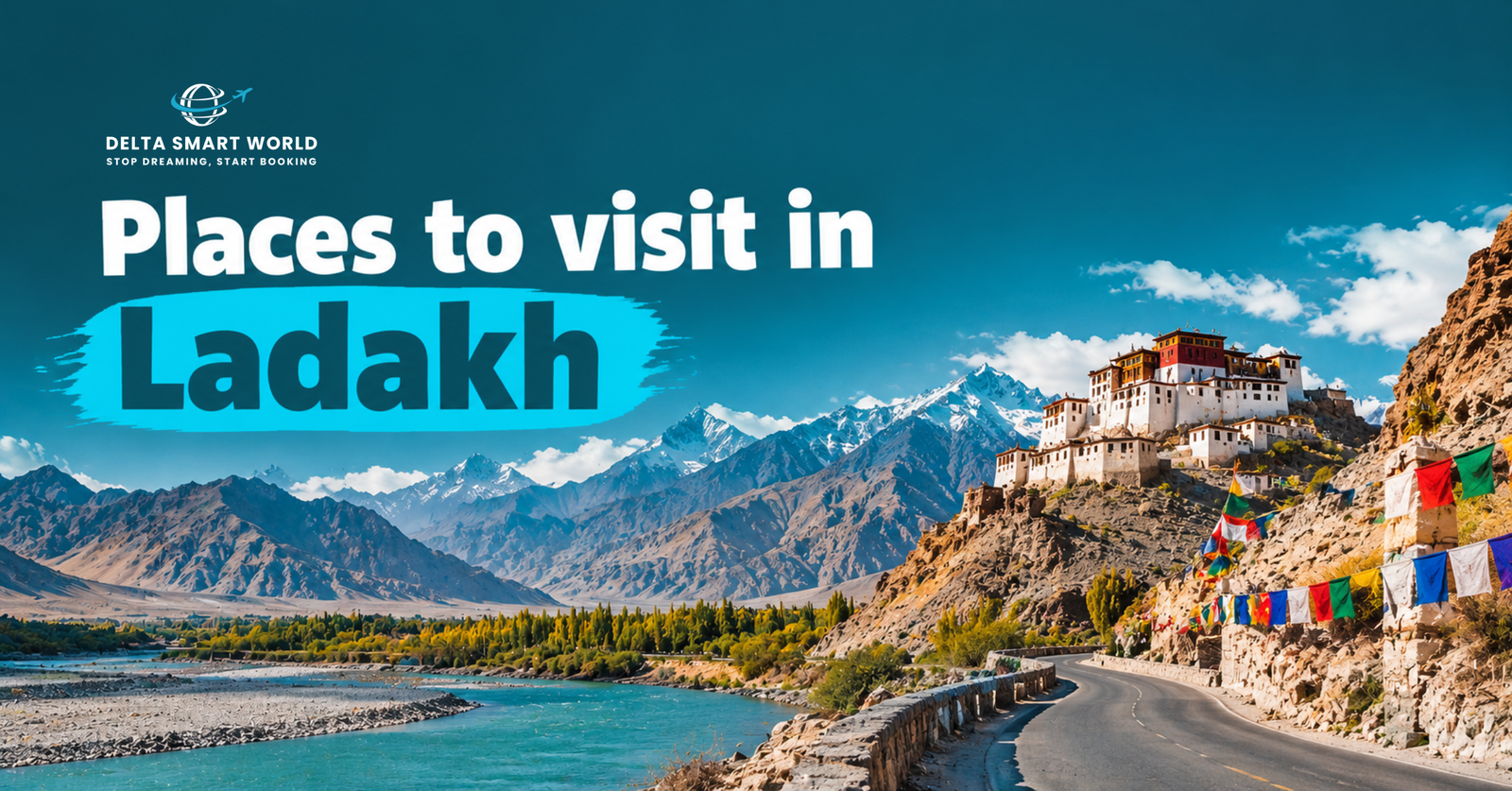
The best places to visit in Ladakh include Leh, Pangong Lake, Nubra Valley and Tso Moriri. Thiksey Monastery, Hemis Monastery, Zanskar Valley and Kargil also rank highly. Together, these places cover ancient monasteries, high-altitude lakes, cold desert dunes and some of the highest motorable passes on Earth. If you have a week, base yourself in Leh. Then add Nubra Valley and Pangong Lake for the full Ladakh experience.
This guide explains each place in detail. It also covers the best season to travel and how to acclimatise. You will learn which permits you need and how to plan a smooth route. Whether you travel as a couple, a family or a group of friends, you will find a clear plan here.
Expert tip from Delta Smart World: Plan your Ladakh trip around altitude, not distance. A short drive can climb more than 1,000 metres, so your body needs time to adjust.
Ladakh at a Glance: Top Places to Visit
Before we explore each destination, this table gives you a quick overview. Use it to shape your first draft of the route.
| Place | Best for | Suggested stay |
|---|---|---|
| Leh | Palaces, markets, monasteries and acclimatisation | 3 nights |
| Nubra Valley | Sand dunes, Diskit Monastery and Khardung La | 2 nights |
| Pangong Lake | Sunrise views, reflections and photography | 1 night |
| Tso Moriri | Quiet shores, birdlife and silence | 1 night |
| Zanskar Valley | Remote culture, river scenery and trekking | 3 nights |
| Kargil and Drass | History, memorials and mountain scenery | 1 night |
| Alchi and Lamayuru | Ancient art and lunar landscapes | 1 night |
Understanding Ladakh Before You Go
Ladakh sits in the far north of India, between the Karakoram and the Great Himalayan ranges. Travellers often call it the Land of High Passes. The name fits well. Roads here climb above 5,000 metres, and every bend reveals a new landscape. Barren mountains glow gold at sunrise. Turquoise lakes shimmer beside snow-capped peaks. Ancient monasteries cling to ridges above green valleys. Few destinations in India pack so much variety into such a compact region.
Ladakh became a Union Territory in 2019. It has two main districts, Leh and Kargil. Leh serves as the main hub for visitors, while Kargil opens the gateway to the western valleys. Most visitors arrive in Leh by air, and some arrive by road from Srinagar or Manali. Both road journeys rank among the most scenic drives in the world.
The Himalayas block the monsoon clouds, so Ladakh receives very little rain. As a result, the region feels like a cold desert. Days are bright and dry. Nights drop sharply, even in summer. The sun feels fierce at this altitude because the thin air filters less ultraviolet light. Therefore, sunscreen, sunglasses and a warm layer matter every single day.
Culture shapes the experience just as much as scenery. Tibetan Buddhism guides daily life in much of Leh district. Prayer flags flutter on rooftops, and monks chant at dawn in whitewashed monasteries. Meanwhile, Kargil district has a large Muslim population, and its valleys show Balti and Purig influences. This blend of traditions makes Ladakh a living cultural landscape rather than a simple scenic backdrop.
Ladakhi hospitality adds warmth to the journey. Families welcome visitors with butter tea, fresh apricots and thukpa, a hearty noodle soup.
What Makes Ladakh Different From Other Himalayan Destinations?
Many hill destinations offer green slopes and cool weather. Ladakh offers something else entirely. The landscape looks almost lunar, with layered rock in shades of ochre, rust and grey. Skies appear deep blue, and the stars at night look astonishingly bright. In addition, the altitude gives every experience a sense of scale. A simple walk to a monastery can leave you breathless in more ways than one.
Another difference lies in the pace. Ladakh rewards slow travel. You cannot rush the passes, and you should not try. Roads can close for weather, and altitude demands rest. Travellers who accept this rhythm usually enjoy the trip far more than those who chase a packed schedule.
Best Time to Visit Ladakh
Timing shapes your entire Ladakh experience, so choose it with care. Most roads and attractions stay open from late spring to early autumn. Winter brings extreme cold, and the main highways usually close because of heavy snow. However, winter also offers rare experiences for hardy travellers.
First, consider summer, which runs from May to September. This season offers open roads, clear skies and comfortable daytime temperatures. Consequently, it attracts the largest number of visitors. Festivals, treks and river rafting all peak in these months. If you want the full range of places to visit in Ladakh, summer gives you the widest choice.
Next, consider autumn, which begins in late September. Crowds thin out, and the light turns soft and golden. Poplar trees in the valleys change colour, and the air feels crisp. Photographers often prefer this window. However, nights get cold quickly, so pack warm layers.
Finally, consider winter, from November to March. Temperatures fall far below freezing. Roads over the high passes usually close, and some lakes freeze solid. Even so, winter reveals a quieter and more intimate Ladakh. Snow leopard sightings become more likely, and the frozen Zanskar River becomes a trekking route for experienced adventurers.
| Season | Months | What to expect | Best for |
|---|---|---|---|
| Late spring | May to June | Open roads, cool mornings, warming days | Monasteries, lakes and first-time visitors |
| Summer | July to August | Warm days, occasional landslides on approach roads | Trekking, rafting and festivals |
| Early autumn | September to October | Golden light, fewer crowds, cold nights | Photography and quiet sightseeing |
| Winter | November to March | Heavy snow, frozen lakes, limited road access | Wildlife and winter treks |
Expert tip from Delta Smart World: Check road status with local authorities before you travel. Highways and passes can close at short notice, so keep a spare day in your plan.
Leh: The Heart of Ladakh
Leh is the natural starting point for every journey in the region. The town sits at roughly 3,500 metres, so it works as an ideal base for acclimatisation. Mountains ring the town on every side. Narrow lanes wind between guesthouses, cafés and craft shops. Meanwhile, the Indus River flows quietly nearby, and green barley fields soften the dry landscape.
Plan at least three nights in Leh. During the first two days, keep your schedule light. Walk slowly, drink plenty of water and enjoy easy sightseeing. By the third day, most travellers feel ready for higher passes and longer drives. This simple pattern protects your health and improves every experience that follows.
Leh Palace and the Old Town
Leh Palace dominates the skyline above the bazaar. King Sengge Namgyal built it in the seventeenth century, and its design resembles the Potala Palace in Lhasa. The palace rises through nine storeys of mud brick, timber and stone. Much of it now stands empty. However, the upper levels reward you with sweeping views across the valley and the Stok Kangri range.
The climb takes some effort at altitude. Take your time, and rest at each landing. Once you reach the roof, you will see why Ladakhi kings chose this site. The town spreads below, and the peaks rise beyond it like a painted wall.
The old town lies just beneath the palace. Its alleys hold traditional houses, small mosques and Buddhist shrines side by side. Walk here in the early morning, when shopkeepers sweep their steps and the light turns warm. In addition, you will find hidden courtyards and rooftop cafés that make excellent resting points.
Shanti Stupa
Shanti Stupa crowns a hilltop above Leh. Japanese and Ladakhi Buddhists built it as a symbol of peace, and the Dalai Lama inaugurated it. The white dome glows at sunset, and the surrounding peaks turn pink and amber. Many visitors climb the steps at dusk to watch the valley light up.
You can also drive to the top. However, the climb on foot gives a stronger sense of the setting. Bring a jacket, because the wind picks up quickly after sunset.
Leh Market and Local Crafts
The main bazaar offers a lively introduction to Ladakhi life. Stalls sell Pashmina shawls, turquoise jewellery, prayer wheels, thangka paintings and woollen socks. Bargain politely, and ask shopkeepers about each item. Many artisans love to explain how they made each piece.
Besides shopping, the market lets you sample local food. Try momos, skyu and butter tea. Apricot jam and dried apricots also make excellent souvenirs. Moreover, small bakeries sell fresh Ladakhi bread that tastes best when warm.
Hall of Fame Museum
The Indian Army runs the Hall of Fame near Leh airport. The museum tells the story of the army’s service in the region and the history of Ladakh. Exhibits include photographs, weapons, uniforms and displays about the Siachen Glacier. A section on Ladakhi culture shows traditional costumes, tools and household items. Therefore, the museum suits travellers who enjoy history as much as scenery.
Magnetic Hill and the Sangam
Two easy stops lie along the Leh–Kargil road. First, Magnetic Hill creates a surprising optical illusion. Vehicles seem to roll uphill in neutral gear. Although science explains the effect, the experience still makes visitors smile.
Next, the Sangam near Nimmu shows the meeting of the Indus and Zanskar rivers. The two rivers carry different colours, so you can see them flow side by side before they blend. The spot lies roughly 35 kilometres west of Leh. It makes a fine stop on the way to Alchi or Lamayuru.
Pathar Sahib Gurudwara
This Sikh shrine stands beside the Leh–Kargil highway. Pilgrims and travellers stop here to pay respects and enjoy a cup of tea. The setting feels calm, with mountains rising behind the courtyard. If you travel west from Leh, include it as a peaceful pause.
Expert tip from Delta Smart World: Visit Leh Palace and Shanti Stupa during your first two days. Both involve stairs, but you can pace yourself, and the views help you appreciate the altitude.
Ready to Plan Your Vacations/Holidays?
Reach out to Delta Smart World’s team of destination specialists today!
Monasteries of Ladakh: Sacred Places Worth Your Time
Locals call monasteries gompas, and they form the spiritual backbone of Ladakh. Many sit on dramatic cliffs and ridges. Others nestle quietly in green valleys. Each one offers something different, from towering statues to ancient murals. Visit with respect. Dress modestly, remove your shoes where required and ask before you photograph any interior.
Thiksey Monastery
Thiksey Monastery rises like a small white village on a hill about 19 kilometres from Leh. Its twelve-storey structure makes a striking sight from the highway. Inside, a tall statue of Maitreya Buddha fills a temple hall, and the serene face draws every visitor’s eye.
Arrive early to hear the morning prayers. The monks chant, blow long horns and beat drums while soft light fills the courtyard. Afterwards, climb to the roof and look across the Indus Valley. The view alone justifies the visit.
Hemis Monastery
Hemis Monastery sits in a hidden valley south-east of Leh. It is one of the largest and wealthiest monasteries in the region. Every summer, the monastery hosts the Hemis Festival, which celebrates Padmasambhava, the revered Buddhist master, through traditional cham dances. Dancers wear brilliant costumes and elaborate masks, and drums echo through the courtyard.
Even outside festival days, Hemis offers a museum with thangkas, copper statues and ritual objects. Furthermore, the nearby Hemis National Park shelters snow leopards, Himalayan wolves and blue sheep. Visitors who want wildlife encounters often choose this area for winter tracking.
Shey Palace and Monastery
Shey once served as the summer capital of Ladakhi kings. A large copper-and-gilt Buddha statue dominates the main temple. Rows of small chortens stand in the fields below, and they create a memorable foreground for photographs at golden hour.
The site lies close to Thiksey, so you can combine both in a single morning. Consequently, many itineraries pair Shey, Thiksey and Hemis on one day trip from Leh.
Alchi Monastery
Alchi differs from most Ladakhi monasteries. It sits on low ground beside the Indus, not on a cliff. Its small temples date back roughly a thousand years, and their walls carry extraordinary murals. The paintings show Buddhas, deities and mandalas in fine detail, with influences from Kashmir and Central Asia.
Because the interiors are delicate, photography rules apply. Respect them. Spend time looking closely at the colours and the craftsmanship. Alchi rewards patient visitors more than hurried ones.
Lamayuru Monastery
Lamayuru stands above a valley of eroded hills that locals compare to the moon. The surrounding rock formations look soft and sculpted, and shadows shift across them through the day. The monastery itself ranks among the oldest in Ladakh.
Most travellers visit Lamayuru on the road between Leh and Kargil. Stay for sunset if you can. The “moonland” glows in warm tones, and the quiet feels almost unreal.
Diskit Monastery
Diskit watches over the Nubra Valley from a rocky spur. Its newest landmark is a Maitreya Buddha statue that rises more than 30 metres and faces the valley. The monastery is the oldest and largest in Nubra. Climb to the top, and you will see dunes, rivers and mountain walls stretching into the distance.
Which Monastery Should You Visit If You Have Only One Day?
If time is short, choose Thiksey and Shey. Both lie close to Leh, and both deliver strong visuals and cultural depth. Add Hemis if you want a longer, more immersive day. Alchi and Lamayuru work better as part of a longer road journey westward. In short, match your choice to your pace and your interests.
High-Altitude Lakes in Ladakh
Lakes give Ladakh its most famous images. Their colours change through the day, from steel blue to deep turquoise to glowing orange. Each lake sits in a stark landscape, so the water looks even more vivid. Moreover, their remote settings make them feel like quiet retreats from the modern world.
Pangong Lake (Pangong Tso)
Pangong Lake stretches for roughly 134 kilometres, and it crosses the border between India and China. Only a portion lies on the Indian side. The lake sits above 4,200 metres, and its water shifts through shades of blue, green and grey. Because the lake holds salt, it does not support much aquatic life, but it still attracts migratory birds in summer.
Most travellers reach Pangong from Leh by crossing Chang La, a high pass. The drive takes several hours, so start early. Along the way, you will pass small villages, grazing yaks and wide plateaus. Once you arrive, find a quiet spot on the shore and simply watch the colours change.
Sunrise is the best time to be at the water’s edge. The air is still, the lake mirrors the peaks, and few people are around. Meanwhile, sunset paints the western hills in deep red. If you stay a night, you can enjoy both moments without rushing.
Pangong is cold, even in summer. Wind sweeps across the surface, and the temperature drops sharply after dark. Pack a down jacket, gloves and a warm hat. In addition, give your body time to adjust before you travel there, because the altitude is higher than Leh.
Tso Moriri
Tso Moriri lies in the Changthang region, around 4,500 metres above sea level. It is smaller than Pangong, but many travellers find it more peaceful. Barren mountains rise around the lake, and herders graze pashmina goats on the nearby plains. The village of Korzok sits on the western shore and holds a small monastery.
Bird lovers will enjoy this area. Bar-headed geese, brahminy ducks and black-necked cranes appear in the wetlands during the breeding season. Furthermore, wild asses, the kiang, roam the plains, and you may spot marmots near the road.
Choose Tso Moriri if you want silence. Fewer visitors come here than to Pangong, so the shoreline feels more private. Plan at least one night, because the journey from Leh takes a full day.
Tso Kar
Tso Kar means “white lake”. Salt crusts form along its edges and shine like snow in the sunlight. The lake and its surrounding marshes support a rich variety of birds. You can stop here on the way between Leh and Tso Moriri. The visit deepens your appreciation of the Changthang plateau.
Expert tip from Delta Smart World: Do not rush your lake visits. Reserve a full night at each lake if possible. The best light arrives at dawn and dusk, and you will miss it on a day trip.
Nubra Valley: Dunes, Monasteries and High Passes
Nubra Valley lies north of Leh, across one of the highest motorable roads in the world. The valley sits lower than Leh, so many visitors find the air easier to breathe. Rivers carve through green fields, and sand dunes spread beneath snow-capped mountains. As a result, Nubra feels like several landscapes in one.
Khardung La Pass
The road to Nubra climbs over Khardung La, a pass above 5,300 metres. The mountain air feels thin and sharp. Snow often lines the road, even in summer. Most travellers stop only briefly at the top, because the altitude can cause headaches and fatigue. Take a few photographs, drink some warm tea and continue.
The descent into Nubra reveals a dramatic change. Barren slopes give way to poplars, willows and apricot orchards. The contrast stays in your memory long after the trip ends.
Hunder Sand Dunes and Bactrian Camels
Hunder is the most popular stop in Nubra. Pale sand dunes lie in the middle of a high-altitude valley, and mountains rise behind them. Here, you can ride double-humped Bactrian camels. These animals have lived along old Silk Route trade paths. They still bring a sense of history to the landscape.
Visit in the late afternoon. The light turns golden, and the dunes cast long shadows. Afterwards, enjoy a quiet evening in a valley guesthouse, where the night sky fills with stars.
Diskit and Hunder Villages
Both villages offer a gentle look at rural Ladakhi life. Farmers grow barley, wheat and vegetables in terraced fields. Children play near stone walls, and elders spin prayer wheels beside the road. Walk through the lanes and greet people with a friendly “Julley”, the all-purpose Ladakhi greeting.
Turtuk Village
Turtuk lies at the northern end of the Shyok Valley, close to the Line of Control. The village follows Balti traditions, and its culture differs clearly from that of central Ladakh. Stone houses sit among apricot trees, and narrow irrigation channels run along the paths. Visitors love the warm welcome and the sense of discovery.
Permits apply for Turtuk, so check requirements before you go. In addition, allow extra time on the road, because the drive is long and the scenery rewards frequent stops.
Panamik Hot Springs
Panamik lies further up the Nubra Valley. Natural hot springs bubble from the ground here, and local people treat them with great respect. A visit gives you a pleasant break from long drives, and the surrounding landscape is calm and open.
Ready to Plan Your Vacations/Holidays?
Reach out to Delta Smart World’s team of destination specialists today!
Zanskar Valley: Ladakh’s Remote Frontier
Zanskar rewards travellers who want solitude. The valley lies in the south-west of Ladakh. Snow isolates it from the rest of the region for much of the year. Snow-covered passes guard its borders. Consequently, Zanskar keeps its traditions alive, and visitors feel they have stepped into an older world.
Padum and the Zanskar River
Padum serves as the main town in the valley. From here, you can explore small villages, ancient monasteries and open pastures. The Zanskar River winds through deep gorges, and in summer it offers some of the finest rafting in India. In winter, it freezes into the famous Chadar trek route, which only well-prepared adventurers attempt.
Phugtal Monastery
Phugtal Monastery clings to a cliff face above a gorge. Monks built it around a natural cave, so the whitewashed rooms seem to grow out of the rock. You reach it on foot, and the walk adds to the sense of pilgrimage. Few travellers make this journey, so the monastery retains a rare peace.
Zanskar suits experienced travellers who value quiet and challenge. Roads are long, and services stay basic. However, the reward is a Ladakh that few people see.
Kargil, Drass and the Suru Valley
Kargil lies on the road between Srinagar and Leh. Travellers often treat it as an overnight stop, but the surrounding area deserves more attention. The Suru Valley opens north-west of the town, and the Nun Kun massif rises beyond it. Snow peaks, green meadows and glacial streams make this one of the most scenic corners of Ladakh.
Drass and the Kargil War Memorial
Drass has a reputation as one of the coldest inhabited places in India. Winter temperatures plunge far below freezing. The Kargil War Memorial stands here, and it honours the soldiers who died during the 1999 conflict. The site feels moving, and it carries deep history. Many visitors spend an hour there in quiet reflection.
Suru Valley and Sankoo
The Suru Valley offers a softer landscape than central Ladakh. Meadows spread beside the river, and villages sit among willows. Trekkers use the valley as a base for routes towards the Nun Kun peaks. Even if you do not trek, the drive provides memorable views.
Adventure and Wildlife in Ladakh
Ladakh appeals to adventurers as much as to cultural travellers. The terrain supports a wide range of activities, from gentle walks to demanding expeditions.
Trekking in Ladakh
Trekking routes vary in difficulty, so you can choose a trail that suits your fitness.
- Sham Valley Trek: an easy introduction, with villages, monasteries and mild altitude.
- Markha Valley Trek: a classic route with river crossings, high passes and homestays.
- Stok Kangri Climb: a demanding ascent above 6,000 metres for experienced mountaineers.
- Chadar Trek: a winter walk on the frozen Zanskar River.
Always trek with a licensed guide. Weather changes quickly, and altitude can affect even fit travellers.
River Rafting
The Indus and Zanskar rivers offer exciting rafting. Gentle stretches near Nimmu suit beginners. Meanwhile, the Zanskar gorges challenge experienced rafters. Trained guides lead every trip, and they provide helmets and life jackets.
Wildlife and Birdwatching
Ladakh shelters rare animals. Snow leopards, Tibetan wolves, Ladakh urials and blue sheep live in its mountains. Winter offers the best chance to see snow leopards, and local guides know where to look. Birdwatchers can also spot the black-necked crane, the Himalayan griffon and the Tibetan snowcock.
Motorcycle and Road Journeys
The Manali–Leh and Srinagar–Leh highways attract riders from around the world. Both routes cross high passes, remote plateaus and deep valleys. However, they demand careful planning. Check weather, carry spares and respect the altitude. If you prefer comfort, hire an experienced driver who knows the roads well.
Ready to Plan Your Vacations/Holidays?
Reach out to Delta Smart World’s team of destination specialists today!
Planning Your Ladakh Itinerary
A good itinerary balances sightseeing with rest. Ladakh demands more patience than most destinations, so build in buffer days. Below, we outline three sample routes. Each one follows the same principle: start in Leh, acclimatise, then climb higher.
A Classic Seven-Day Ladakh Route
- Day 1: Arrive in Leh, rest and drink plenty of water.
- Day 2: Explore Leh Palace, the old town and Shanti Stupa at sunset.
- Day 3: Visit Thiksey, Shey and Hemis monasteries.
- Day 4: Cross Khardung La and settle into Nubra Valley.
- Day 5: Ride camels at Hunder, then visit Diskit Monastery.
- Day 6: Travel to Pangong Lake and stay overnight on the shore.
- Day 7: Return to Leh, visit the market and prepare for departure.
A Ten-Day Culture and Landscape Route
This route adds the west and the Changthang plateau. After three nights in Leh, travel to Alchi and Lamayuru. Then cross to Nubra Valley for two nights. Next, spend a night at Pangong. Finally, return to Leh via Chang La. This pattern lets you see monasteries, dunes and lakes without rushing.
A Two-Week Immersive Journey
If you have more time, add Tso Moriri, Tso Kar and Zanskar Valley. A longer trip also lets you include a short trek, such as the Sham Valley route. Therefore, travellers who love slow exploration usually prefer this option.
Expert tip from Delta Smart World: Keep one flexible day in every itinerary. Weather, road work and altitude can all change your plans. A spare day removes stress and protects the rest of your trip.
Altitude and Health: Staying Well in Ladakh
Altitude shapes every decision in Ladakh. Leh sits at roughly 3,500 metres, and many passes climb above 5,000 metres. The air holds far less oxygen than at sea level. Therefore, your body needs time to adapt. Ignore this rule, and even the finest trip can turn uncomfortable.
How to Acclimatise Properly
Follow these steps in the first days:
- Rest on arrival. Avoid heavy activity for the first 24 to 48 hours.
- Drink water often. Hydration helps your body adjust.
- Eat light meals. Heavy food can make you feel sluggish.
- Avoid alcohol and smoking. Both slow acclimatisation.
- Walk slowly. Fast movement drains your energy at altitude.
- Sleep well. Good rest speeds up adaptation.
Recognising Altitude Sickness
Mild symptoms include headache, nausea, dizziness and poor sleep. Most people recover with rest and water. However, severe symptoms need urgent attention. Breathlessness at rest, confusion, a persistent cough or loss of balance can signal a serious condition. In that case, descend to a lower altitude and seek medical help immediately.
Speak with your doctor before you travel, especially if you have heart, lung or blood pressure concerns. Your doctor can advise you on any medication that suits your situation.
Sun, Cold and Dry Air
Ladakh’s sun burns quickly, so apply sunscreen daily and wear UV-protective sunglasses. A wide-brimmed hat helps too. The air is very dry, so carry lip balm and moisturiser. Meanwhile, temperatures swing sharply between day and night. Layering gives you the flexibility to adapt.
Permits and Practical Preparation
Several areas in Ladakh sit close to sensitive borders. Therefore, visitors need permits for places such as Nubra Valley, Pangong Lake, Tso Moriri and Turtuk. Indian nationals typically need an Inner Line Permit, while foreign nationals need a Protected Area Permit. Rules can change, so confirm the latest requirements with official sources before you travel.
Carry several printed copies of your permits and a valid photo ID. Checkpoints along the route may ask for them. In addition, mobile coverage varies across the region. Prepaid connections from other states may not work, so check network rules in advance. Download offline maps and share your route with someone you trust.
What to Pack for Ladakh
- Layers: thermal wear, fleece, a down jacket and a windproof shell.
- Sun protection: sunscreen, sunglasses, a hat and lip balm.
- Footwear: sturdy walking shoes and warm socks.
- Health items: a personal first-aid kit and any prescribed medicines.
- Power: a power bank, because charging points are scarce.
- Documents: permits, identification and travel confirmations.
Travelling Responsibly in Ladakh
Ladakh’s environment is fragile, and water is scarce. Carry a reusable bottle and refuse single-use plastic. Respect local customs, ask before you photograph people and keep to marked paths. Moreover, support local artisans and homestays, because this keeps your visit beneficial to the community.
How Delta Smart World Approaches Ladakh
At Delta Smart World, we believe a great destination deserves a great stay. Our team travels extensively to identify outstanding hotels, resorts and villas. We evaluate each property against carefully defined standards before we welcome it into our member experience. In a region like Ladakh, those standards matter even more.
When we assess a stay in a high-altitude destination, we look at several things:
- Comfort in extreme weather: reliable heating, warm bedding and well-built rooms.
- Health awareness: staff who understand altitude and respond calmly to concerns.
- Location: easy access to key sights without long, tiring transfers.
- Service: genuine hospitality that reflects local culture.
- Safety and trust: transparent practices and dependable support throughout the stay.
We also value authenticity. A luxury stay in Ladakh should connect you to the place, not isolate you from it. Therefore, we favour properties that respect local architecture, source local ingredients and treat their teams well.
Our members trust us because we do the groundwork. We visit, we test and we choose carefully. As a result, you can focus on the mountains rather than the logistics.
Ready to Plan Your Vacations/Holidays?
Reach out to Delta Smart World’s team of destination specialists today!
Frequently Asked Questions About Ladakh
Start with Leh, Thiksey Monastery, Nubra Valley and Pangong Lake. These places balance culture, scenery and easy access. Add Alchi and Lamayuru if you have extra time.
A week covers Leh, Nubra Valley and Pangong Lake. Ten days lets you add Alchi and Lamayuru at a slower pace. Always include acclimatisation days at the start.
Yes, but altitude needs extra care. Spend at least two nights in Leh before you head higher, and consult a doctor before you travel.
Leh town and nearby monasteries usually need no special permit. Nubra Valley, Pangong Lake, Tso Moriri and Turtuk do require one. Verify the latest rules with official authorities before you travel.
Most travellers fly into Leh, which gives a gentle start if you rest on arrival. Adventurous travellers can drive from Manali or Srinagar. Both highways open only for part of the year.
Final Thoughts: Why Ladakh Stays With You
Ladakh does not behave like a typical destination. It slows you down, and it asks you to look more closely. The thin air makes every step deliberate. The silence in a mountain valley feels almost physical. Meanwhile, the warmth of the people reminds you why travel matters.
The best places to visit in Ladakh share one quality: they leave a lasting impression. Leh offers history and charm. Thiksey and Hemis open a window into living Buddhism. Nubra Valley surprises with dunes and green fields. Pangong and Tso Moriri deliver shimmering water against bare mountains. Zanskar and Kargil add depth for those who wish to go further.
Plan with patience, respect the altitude and leave room for the unexpected. If you do, Ladakh will repay you many times over. To learn more about the region’s geography and history, read the Ladakh overview on Wikipedia. You can also browse the official Incredible India resources.
At Delta Smart World, we want every journey to feel effortless and inspiring. Let our experience guide your next mountain escape, and discover Ladakh at its very best.
Ready to Plan Your Vacations/Holidays?
Reach out to Delta Smart World’s team of destination specialists today!