
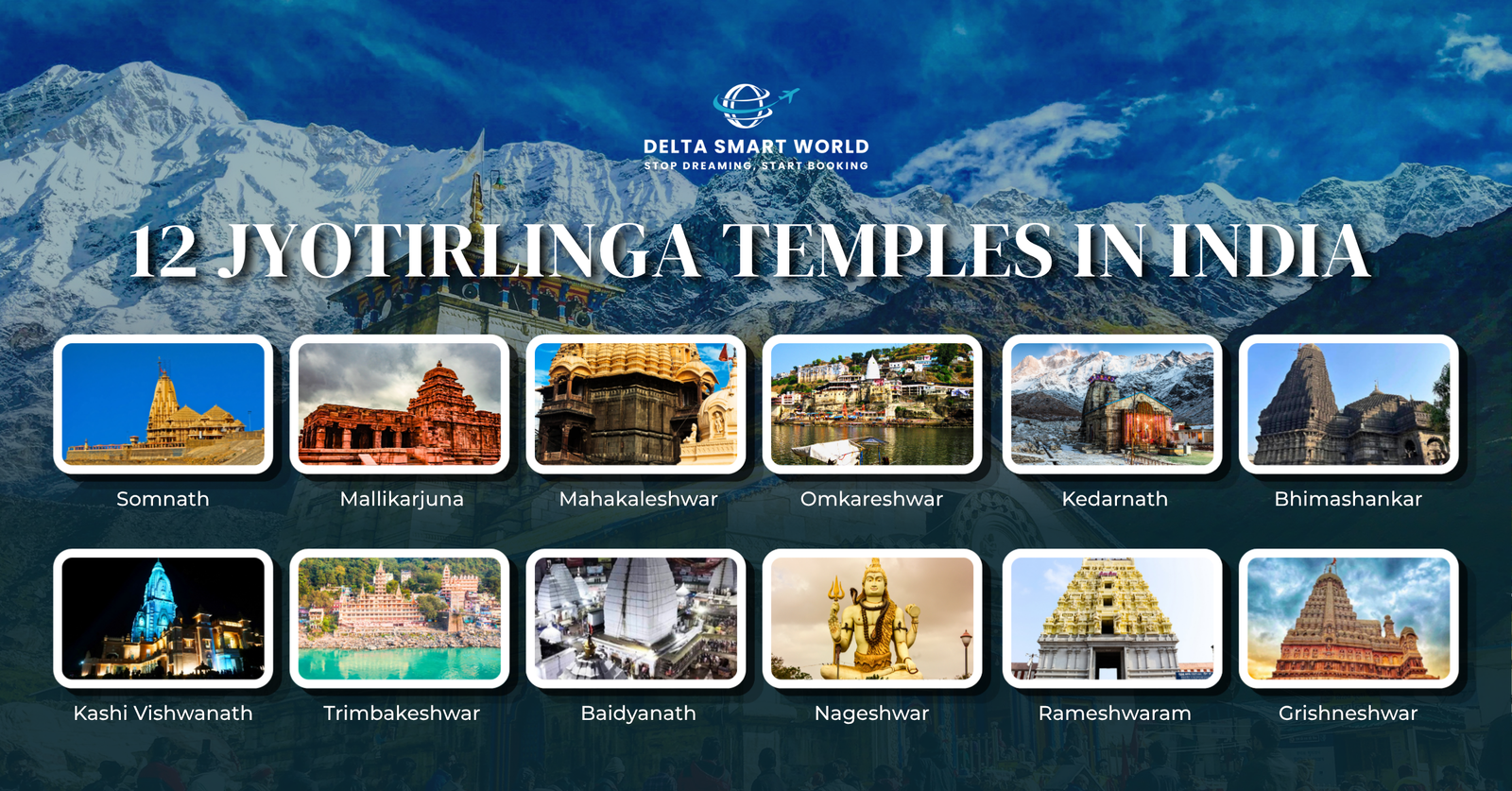
India holds twelve sacred Jyotirlinga temples, and each one honors Lord Shiva in his radiant form of light. Pilgrims travel from every state to visit these shrines every year. This guide lists all twelve Jyotirlingas, explains their meaning, and helps you plan a smooth pilgrimage. Delta Smart World builds this resource for travelers who want accurate, well-researched guidance before they set out on a spiritual journey.
Each Jyotirlinga carries its own legend, architecture, and regional flavor. Some sit deep in the Himalayan mountains, while others rest near rivers or coastlines. Together, they form one of the most significant pilgrimage circuits in Hinduism. Read on to discover where each temple stands, why it matters, and how to plan your visit with confidence.
What Is a Jyotirlinga? Meaning and Spiritual Significance
A Jyotirlinga represents a shrine where devotees believe Lord Shiva manifested as a column of light. The word itself carries deep meaning, and understanding it helps you appreciate why these twelve sites hold such reverence across India.
The Meaning Behind the Word “Jyotirlinga”
The term combines two Sanskrit words: “Jyoti,” which means radiance or light, and “Linga,” which represents the formless, infinite nature of Shiva. Together, the word describes a “pillar of light” that symbolizes Shiva’s boundless energy. Devotees do not view the Jyotirlinga as a mere idol. Instead, they see it as a direct manifestation of divine consciousness.
Ancient texts describe these shrines as self-manifested, meaning no human hand created them. This belief sets Jyotirlingas apart from other Shiva temples across the country. Many temples house a Shiva lingam, but only twelve locations carry the sacred Jyotirlinga status.
Why Jyotirlingas Hold Special Importance in Hinduism
According to Hindu mythology, Lord Brahma and Lord Vishnu once argued over who held greater power. Shiva appeared before them as an endless pillar of light to settle the dispute. Neither god could find the beginning or end of that pillar, and both eventually accepted Shiva’s supremacy. This story explains why devotees consider the Jyotirlinga sites so powerful.
Over time, twelve locations across India became associated with this divine light. Pilgrims believe that a visit to these shrines brings spiritual liberation, or moksha. Many devout Hindus aim to visit all twelve temples during their lifetime, and this journey is often called the Dwadash Jyotirlinga Yatra.
The Spiritual Power Behind Each Shrine
Every Jyotirlinga carries its own local legend, yet all twelve connect to the same core belief in Shiva’s infinite form. Scriptures such as the Shiva Purana describe these twelve sites in detail and explain their origin stories. Regional traditions add further layers of meaning, so each temple feels distinct even though the underlying philosophy stays the same.
Pilgrims often perform specific rituals at each shrine, and priests guide devotees through prayers, offerings, and sacred chants. This blend of mythology, ritual, and architecture makes the Jyotirlinga circuit one of the richest cultural journeys in India.
Expert Tip from Delta Smart World: Plan your Jyotirlinga journey around regional festivals such as Maha Shivaratri. Temple energy peaks during these periods, though crowds also increase significantly.
The Complete List of 12 Jyotirlingas in India
The twelve Jyotirlingas spread across nine Indian states, and this geographic diversity makes the pilgrimage circuit both spiritually rich and logistically varied. The table below lists every temple along with its state and nearest city, so you can quickly map out your route.
| # | Jyotirlinga Name | State | Nearest City / Landmark |
|---|---|---|---|
| 1 | Somnath | Gujarat | Veraval, Saurashtra coast |
| 2 | Mallikarjuna | Andhra Pradesh | Srisailam, Nallamala Hills |
| 3 | Mahakaleshwar | Madhya Pradesh | Ujjain, banks of the Shipra River |
| 4 | Omkareshwar | Madhya Pradesh | Mandhata Island, Narmada River |
| 5 | Kedarnath | Uttarakhand | Garhwal Himalayas |
| 6 | Bhimashankar | Maharashtra | Sahyadri Hills, near Pune |
| 7 | Kashi Vishwanath | Uttar Pradesh | Varanasi, banks of the Ganges |
| 8 | Trimbakeshwar | Maharashtra | Nashik, source of the Godavari |
| 9 | Vaidyanath | Jharkhand | Deoghar |
| 10 | Nageshwar | Gujarat | Near Dwarka |
| 11 | Rameshwaram (Ramanathaswamy) | Tamil Nadu | Pamban Island |
| 12 | Grishneshwar | Maharashtra | Near Ellora, Aurangabad district |
Notice how the temples span coastal towns, riverbanks, hill regions, and even a Himalayan valley. This spread means your travel style, whether you prefer scenic drives, train journeys, or short treks, will shape your overall route. Let’s explore each temple in detail, starting with the westernmost shrine.
Jyotirlinga Travel Basics
Do all twelve Jyotirlingas sit in one region? No, the temples spread across nine different states, from Gujarat in the west to Tamil Nadu in the south.
Can I visit more than one Jyotirlinga in a single trip? Yes, many pilgrims group nearby temples together, such as Somnath and Nageshwar in Gujarat, to save travel time.
Do I need a guide to visit these temples? A guide is not mandatory, though local priests and temple staff often assist first-time visitors with rituals and directions.
Are the temples open every day of the year? Most temples stay open daily, though Kedarnath remains closed during winter months due to heavy snowfall in the region.
Somnath Jyotirlinga — Gujarat
Somnath stands as the first among the twelve Jyotirlingas, and many pilgrims consider it the most historically significant. The temple sits along the Arabian Sea coast in Veraval, Gujarat, and waves crash near its outer walls during high tide.
History and Mythology
Ancient scriptures describe Somnath as the very first Jyotirlinga that Shiva revealed. Legend connects the temple to the Moon God, Chandra, who worshipped Shiva here to lift a curse. Over the centuries, invaders destroyed the temple multiple times, yet devotees rebuilt it again and again. This resilience earned Somnath a reputation as a symbol of faith and endurance.
The current structure reflects a mid-twentieth-century reconstruction, and it follows the Chalukya style of architecture. Intricate carvings cover the temple’s exterior, while the main sanctum houses the sacred lingam.
Architecture and Temple Highlights
The temple complex includes a grand assembly hall, ornate pillars, and a tall spire visible from a distance. A sound and light show runs in the evening and narrates the temple’s turbulent history. Many visitors also explore the nearby Triveni Ghat, where three rivers reportedly merge before meeting the sea.
Best Time to Visit Somnath
Winter months, from October through March, offer pleasant coastal weather for temple visits. Summer temperatures climb significantly, so plan early morning visits if you travel between April and June. Monsoon season adds humidity but also brings dramatic ocean views.
Mallikarjuna Jyotirlinga — Srisailam, Andhra Pradesh
Mallikarjuna sits atop the Nallamala Hills in Andhra Pradesh, and dense forest surrounds the temple on nearly every side. This location earns Mallikarjuna a unique distinction: it also ranks among the Shakti Peethas, sacred sites dedicated to the divine feminine.
Legend and Regional Importance
Local legend describes how Lord Kartikeya, Shiva’s son, left home in frustration after his parents arranged his brother’s marriage first. Shiva and Parvati followed him to console him, and they eventually settled at this hilltop location. Devotees believe this dual presence, “Mallika” for Parvati and “Arjuna” for Shiva, gives the temple its name.
Temple Architecture and Surroundings
The temple’s outer walls display detailed stone carvings depicting mythological scenes. A fort-like boundary wall surrounds the main structure, and this design likely served defensive purposes centuries ago. The nearby Krishna River and Srisailam Dam add scenic value to any visit.
Planning Your Visit
Reach Srisailam via road from Hyderabad, since the drive winds through forested hills with several scenic viewpoints. Carry water and snacks, as the route passes through less-developed stretches. Avoid the peak monsoon months if you prefer drier trails around the temple town.
Mahakaleshwar Jyotirlinga — Ujjain, Madhya Pradesh
Mahakaleshwar stands in the ancient city of Ujjain, and it holds a special place among all twelve Jyotirlingas. Priests here perform a unique ritual that draws pilgrims from across the country.
The Legendary Bhasma Aarti
Every morning before sunrise, priests conduct the Bhasma Aarti, a ritual that involves offering sacred ash to the lingam. This tradition remains exclusive to Mahakaleshwar among all Jyotirlinga sites. Devotees often wake before dawn to secure a spot for this powerful ceremony.
Why Ujjain Matters to Hindu Pilgrims
Ujjain sits along the Shipra River and hosts the Kumbh Mela once every twelve years. The city’s spiritual significance extends beyond the temple itself, since ancient scholars once used Ujjain as a reference point for calculating time and astrology. This historical layer adds depth to any visit.
Visiting Tips for Mahakaleshwar
Book Bhasma Aarti tickets in advance, since availability fills quickly during peak seasons. Dress modestly, and expect security checks before entering the temple complex. Many pilgrims combine this visit with a stop at nearby Omkareshwar, since both temples sit in Madhya Pradesh.
Omkareshwar Jyotirlinga — Madhya Pradesh
Omkareshwar rests on an island shaped like the sacred “Om” symbol, right at the confluence of the Narmada and Kaveri rivers. This natural formation adds a striking visual element to the pilgrimage experience.
The Island Temple Setting
Pilgrims cross a bridge to reach Mandhata Island, where the main temple stands. The island’s shape reinforces its spiritual symbolism, since devotees believe the very geography reflects divine design. A parikrama, or circumambulation path, allows visitors to walk around the island while chanting prayers.
Mythology Behind Omkareshwar
According to legend, the Vindhya mountain range once worshipped Shiva here to gain strength and stature. Shiva granted the request and agreed to remain at this location permanently as a Jyotirlinga. This story explains why the surrounding hills carry such spiritual weight for local communities.
Getting There and What to Expect
Indore serves as the nearest major city with strong transport connections. Boat rides across the Narmada offer a peaceful way to view the temple from the water. Evening aarti sessions draw large crowds, so arrive early if you want a clear view of the ceremony.
Kedarnath Jyotirlinga — Uttarakhand
Kedarnath sits among the most physically demanding Jyotirlinga destinations, and it rewards determined pilgrims with breathtaking Himalayan scenery. The temple stands at a high altitude, surrounded by snow-capped peaks for much of the year.
The Trek and Journey
Most pilgrims begin their journey from Gaurikund, then trek roughly sixteen kilometers to reach the temple. Ponies, palanquins, and helicopter services offer alternatives for those who cannot complete the trek on foot. The path winds through valleys, streams, and steep inclines, so physical preparation matters greatly.
Mythological Roots
The Mahabharata connects Kedarnath to the Pandava brothers, who sought Shiva’s forgiveness after the Kurukshetra war. Shiva reportedly evaded them by transforming into a bull and diving underground, leaving only his hump visible at this location. This legend gives Kedarnath its distinct, rugged spiritual character.
Seasonal Access
The temple opens only between late April and early November, since heavy snowfall makes the region inaccessible during winter. Check official portals for exact opening dates each year, since authorities adjust the calendar based on weather conditions.
Expert Tip from Delta Smart World: Build extra rest days into any Kedarnath itinerary. Altitude adjustment matters more than trekking speed for a safe, comfortable pilgrimage.
Bhimashankar Jyotirlinga — Maharashtra
Bhimashankar sits within a protected wildlife sanctuary in the Sahyadri hill range, not far from Pune. This setting gives the temple a peaceful, forested atmosphere that differs from more urban pilgrimage sites.
Nature Meets Spirituality
The Bhimashankar Wildlife Sanctuary surrounds the temple, and it protects several rare species, including the giant Indian squirrel. Trekkers often combine a temple visit with nature trails through the sanctuary. This dual appeal draws both pilgrims and nature enthusiasts to the same destination.
The Legend of Bhima
Local mythology connects the temple to a fierce battle between Shiva and the demon Tripurasura. After defeating the demon, Shiva rested here, and his sweat reportedly formed the Bhima River. This origin story explains the temple’s name and its connection to the surrounding waterway.
Visitor Guidance
Reach Bhimashankar via a scenic ghat road from Pune, though the drive can take several hours due to winding terrain. Pack warm clothing if you visit during winter mornings, since temperatures drop noticeably at this elevation. Respect sanctuary rules if you explore beyond the temple grounds.
Kashi Vishwanath Jyotirlinga — Varanasi, Uttar Pradesh
Kashi Vishwanath stands in Varanasi, one of the oldest continuously inhabited cities in the world. This Jyotirlinga holds a central place in Hindu spiritual life, and countless pilgrims consider a visit here essential.
The Spiritual Capital of India
Varanasi sits along the Ganges River, and devotees believe that dying within this city grants liberation from the cycle of rebirth. The temple complex recently underwent a major redevelopment, known as the Kashi Vishwanath Corridor, which connects the temple directly to the riverbank. This project transformed how pilgrims move between the temple and the sacred ghats.
Rituals and River Connection
Many pilgrims begin their day with a dip in the Ganges before entering the temple. Evening Ganga Aarti ceremonies at nearby ghats draw enormous crowds, and the sight of hundreds of oil lamps reflecting on the river creates an unforgettable scene. Priests perform multiple aartis throughout the day at the temple itself.
Practical Visiting Advice
Expect significant crowds year-round, since Varanasi attracts both religious and cultural travelers. Security screening applies before temple entry, so arrive early and avoid carrying restricted items. Boat rides along the Ganges offer a peaceful alternative view of the ghats and temple skyline.
Trimbakeshwar Jyotirlinga — Nashik, Maharashtra
Trimbakeshwar sits near Nashik, at the very source of the Godavari River, one of India’s longest waterways. This connection between temple and river source gives the site special ecological and spiritual significance.
Unique Temple Features
The temple’s lingam differs from most others, since it displays three faces representing Brahma, Vishnu, and Shiva together. This feature makes Trimbakeshwar visually and symbolically distinct among the twelve Jyotirlingas. Black stone construction gives the temple a striking, weathered appearance.
Legend of the Godavari’s Origin
According to local tradition, sage Gautama performed penance here to bring the Godavari River down from the heavens. Shiva granted the request and settled at this location as the Jyotirlinga, forever tied to the river’s origin. Pilgrims often trace the river’s course as part of a broader spiritual journey.
Travel Tips
Nashik connects well to major cities through both rail and road networks. Combine your Trimbakeshwar visit with a stop at nearby vineyards, since the region has become known for wine tourism as well. Modest dress remains essential, and photography restrictions apply inside the main sanctum.
Ready to Plan Your Vacations/Holidays?
Reach out to Delta Smart World’s team of destination specialists today!
Vaidyanath Jyotirlinga — Deoghar, Jharkhand
Vaidyanath, sometimes called Baidyanath, sits in Deoghar, Jharkhand, and it connects to legends of healing and medicine. The name itself translates roughly to “Lord of Physicians.”
The Healing Legend
Mythology describes how the demon king Ravana once tried to carry Shiva’s lingam to Lanka. Shiva agreed to travel with Ravana under one condition: the lingam could never touch the ground before reaching its destination. Through divine intervention, the lingam ended up placed at Deoghar instead, and it remained there permanently.
Cultural and Religious Importance
Pilgrims often combine a Vaidyanath visit with a trip to nearby Basukinath temple, forming a two-part pilgrimage circuit. The Shravani Mela, held during the monsoon month of Shravan, draws millions of devotees who carry holy water from the Ganges for miles on foot. This annual event ranks among the largest pilgrimages in eastern India.
Visiting Considerations
Expect very large crowds during the Shravan festival period, so plan carefully if you travel during this window. Off-season visits offer a calmer, more reflective experience. Deoghar connects to major cities through both rail links and regional airports.
Nageshwar Jyotirlinga — Dwarka, Gujarat
Nageshwar sits near Dwarka on Gujarat’s western coastline, and it connects to legends of protection from evil forces. A massive Shiva statue near the temple entrance makes this site instantly recognizable.
Legend of Protection
According to the Shiva Purana, a demon named Daruka once trapped a devotee within the sea. Shiva intervened and destroyed the demon, then established this Jyotirlinga to protect devotees from harmful forces going forward. This legend explains the temple’s name, which translates roughly to “Lord of Serpents.”
Temple Highlights
A towering statue of Shiva, seated in meditation, greets visitors well before they reach the main temple. This 25-meter statue has become a popular photo point for travelers, even beyond the temple’s religious significance. The main sanctum remains modest in size compared to the grand statue outside.
Combining with Dwarka
Most pilgrims visit Nageshwar alongside the famous Dwarkadhish Temple, dedicated to Lord Krishna, since both sites sit close together. This pairing allows travelers to cover two major pilgrimage destinations within a single day. Coastal weather stays warm year-round, though winter months remain more comfortable for extended sightseeing.
Rameshwaram Jyotirlinga — Tamil Nadu
Rameshwaram, home to the Ramanathaswamy Temple, sits on Pamban Island near India’s southern tip. This Jyotirlinga connects directly to the Ramayana, one of Hinduism’s most beloved epics.
Connection to Lord Rama
Legend states that Lord Rama installed this lingam to seek forgiveness after defeating the demon king Ravana in Lanka. Rama chose this specific coastal location because it marked the closest point to Lanka across the sea. This story ties Rameshwaram to both Shiva worship and the broader Rama pilgrimage circuit.
Architectural Grandeur
The temple features some of the longest corridors among all Hindu temples in India, lined with massive carved pillars. Twenty-two sacred wells sit within the temple complex, and tradition holds that each well carries a different taste and healing property. Pilgrims often bathe in these wells before entering the main sanctum.
Getting to Rameshwaram
A causeway and the iconic Pamban Bridge connect the island to mainland Tamil Nadu, offering dramatic sea views along the route. Combine your visit with nearby Dhanushkodi, a coastal ghost town with striking, windswept scenery. Sea breezes keep temperatures relatively mild throughout most of the year.
Grishneshwar Jyotirlinga — Maharashtra
Grishneshwar, the twelfth and final Jyotirlinga, sits near Aurangabad in Maharashtra, close to the world-renowned Ellora Caves. Though smaller than several other Jyotirlinga temples, it carries equal spiritual weight in Hindu tradition.
Legend of Devotion
According to local mythology, a devoted woman named Kusuma prayed fervently to Shiva after tragedy struck her family. Her unwavering faith moved Shiva to restore her son to life and manifest as a Jyotirlinga at this very spot. This story of devotion gives Grishneshwar its emotional resonance among pilgrims.
Architectural Style
The temple showcases red volcanic rock construction, and intricate carvings cover much of its surface. Five tiers make up the temple’s tower, and this design reflects South Indian architectural influences blended with local Maharashtrian style.
Pairing with Ellora Caves
Most travelers combine a Grishneshwar visit with a tour of the nearby Ellora Caves, a UNESCO World Heritage Site featuring rock-cut temples spanning multiple religious traditions. You can learn more about this remarkable site through the official UNESCO World Heritage Centre listing. This pairing makes for one of the most culturally rich single-day excursions on the entire Jyotirlinga circuit.
How to Plan a Jyotirlinga Pilgrimage
Visiting all twelve Jyotirlingas requires thoughtful planning, since the temples spread across such a wide geographic area. A well-organized route saves time and reduces unnecessary travel fatigue.
Choosing Your Route
Most travelers group the temples by region rather than attempting a single continuous journey. Consider these regional clusters when mapping your pilgrimage:
- Western Circuit: Somnath and Nageshwar, both in Gujarat
- Central Circuit: Mahakaleshwar and Omkareshwar, both in Madhya Pradesh
- Maharashtra Circuit: Bhimashankar, Trimbakeshwar, and Grishneshwar
- Northern Circuit: Kashi Vishwanath and Kedarnath
- Southern Circuit: Mallikarjuna and Rameshwaram
- Eastern Circuit: Vaidyanath in Jharkhand
This grouping allows travelers to complete the journey across several shorter trips rather than one exhausting expedition.
Trains connect most major cities near these temples, and railway travel often proves more comfortable than long road journeys across state borders. Domestic flights help shorten travel time between distant circuits, such as the jump from Gujarat to Tamil Nadu. Local taxis or hired cars generally work best for the final stretch between a railway station and the temple itself, since many shrines sit outside city centers.
Consider pairing each Jyotirlinga circuit with nearby heritage sites to enrich your overall journey. The Maharashtra circuit, for example, sits close to both the Ellora and Ajanta cave complexes, while the Gujarat circuit connects easily to Dwarka’s broader pilgrim trail. This approach turns a purely religious trip into a fuller cultural experience without adding excessive travel time.
Best Season for Temple Travel
Weather varies significantly across these twelve locations, so seasonal planning matters. The table below offers general guidance for each region.
| Region | Recommended Season | Notes |
|---|---|---|
| Gujarat (Somnath, Nageshwar) | October to March | Avoid peak summer heat |
| Madhya Pradesh (Mahakaleshwar, Omkareshwar) | October to March | Pleasant temperatures throughout |
| Maharashtra (Bhimashankar, Trimbakeshwar, Grishneshwar) | October to February | Monsoon adds greenery but limits trekking |
| Uttarakhand (Kedarnath) | May to June, September to October | Temple closed in winter |
| Uttar Pradesh (Kashi Vishwanath) | October to March | Comfortable riverside weather |
| Andhra Pradesh (Mallikarjuna) | November to February | Avoid heavy monsoon rains |
| Tamil Nadu (Rameshwaram) | October to April | Coastal breeze keeps heat manageable |
| Jharkhand (Vaidyanath) | October to March, excluding Shravan crowds | Plan around festival timing |
What to Pack and Wear
Modest, comfortable clothing works best across all twelve temples, since dress codes tend to favor traditional or conservative attire. Keep these packing essentials in mind:
- Comfortable walking shoes for long temple corridors and uneven terrain
- Light cotton clothing for coastal and plains temples
- Warm layers for Kedarnath and winter visits to hill regions
- A small bag for offerings, water, and personal items
- Copies of identification documents for security checks
Expert Tip from Delta Smart World: Carry a lightweight shawl or scarf at every temple. Many sites require covered shoulders, and a versatile layer works for both warmth and modesty.
Common Mistakes Pilgrims Make (and How to Avoid Them)
Even experienced travelers sometimes overlook small details that affect an otherwise smooth pilgrimage. Avoiding these common mistakes helps you make the most of your Jyotirlinga journey.
- Underestimating travel distances: Many pilgrims assume temples sit closer together than they actually do. Always check exact travel time before finalizing a multi-temple itinerary.
- Skipping weather research: Kedarnath’s seasonal closure catches many first-time pilgrims off guard. Confirm opening dates well before you book any travel.
- Ignoring dress codes: Some temples enforce stricter modesty requirements than others. Pack versatile, modest clothing to avoid last-minute issues at the entrance.
- Overpacking the itinerary: Rushing between multiple temples in a single day often leads to exhaustion and a rushed spiritual experience. Build rest periods into your schedule.
- Forgetting identification documents: Security checks apply at several temples, and staff may request identification during high-traffic periods like festivals.
Expert Tip from Delta Smart World: Build a buffer day into every regional circuit. Weather delays, temple closures, and long queues can shift your schedule quickly.
Rituals and Customs at Jyotirlinga Temples
Understanding temple customs helps you show respect and move through the pilgrimage smoothly. While specific rituals vary by location, several practices remain common across most Jyotirlinga sites.
Common Puja Rituals
Priests typically guide visitors through offerings such as water, milk, bilva leaves, and flowers placed directly on the lingam. Many temples also conduct abhishekam, a ritual bathing ceremony performed with sacred substances. Chanting the “Om Namah Shivaya” mantra remains central to worship at every Jyotirlinga site.
Devotees often circle the sanctum in a clockwise direction, a practice known as pradakshina. This act symbolizes surrender and devotion toward the divine presence within the temple. Many pilgrims also offer donations toward temple maintenance, though this remains entirely voluntary.
Temple Etiquette for Visitors
Respectful behavior matters greatly at these sacred sites, so keep the following etiquette points in mind:
- Remove footwear before entering the main temple area
- Avoid wearing leather items in several temple complexes
- Photography restrictions apply inside many inner sanctums
- Maintain silence or speak softly within prayer halls
- Follow queue systems during high-traffic periods like festivals
Temple staff and priests generally guide first-time visitors through unfamiliar rituals, so don’t hesitate to ask questions politely. Most pilgrims find that local guidance enhances rather than complicates the overall experience.
Why Travel with Delta Smart World for Your Jyotirlinga Journey
Planning a pilgrimage across such varied terrain, from coastal Gujarat to the Himalayan trails of Kedarnath, requires careful coordination. Delta Smart World curates travel experiences that respect both the spiritual weight of these destinations and the practical needs of modern travelers.
Our team evaluates accommodations near each Jyotirlinga site against strict comfort and reliability standards before recommending them to members. We understand that pilgrimage travel differs from typical leisure trips, so we prioritize proximity to temples, restful stays between long travel days, and dependable local support. This approach helps travelers focus on the spiritual journey rather than logistical stress.
Whether you plan to visit a single Jyotirlinga or attempt the full circuit across multiple trips, thoughtful preparation makes the experience far more meaningful. Delta Smart World stands ready to support that journey with well-vetted stays and destination expertise gathered through extensive, firsthand travel across India.
Our specialists study each region’s seasonal patterns, local transport options, and temple-specific customs before recommending an itinerary to members. This groundwork means travelers spend less time researching logistics and more time absorbing the significance of each shrine they visit. We also stay attentive to smaller details, such as which accommodations sit within easy reach of early-morning aarti ceremonies, since timing often shapes the entire pilgrimage experience.
Members who travel with Delta Smart World gain access to guidance that goes beyond a standard checklist. We factor in comfort during long travel days, reliable local support at each destination, and thoughtful pacing across multi-temple circuits. This level of care reflects our broader mission: curating vacation and pilgrimage experiences that meet consistently high standards, wherever in India the journey leads.
Frequently Asked Questions
The twelve Jyotirlingas include Somnath, Mallikarjuna, Mahakaleshwar, Omkareshwar, Kedarnath, Bhimashankar, Kashi Vishwanath, Trimbakeshwar, Vaidyanath, Nageshwar, Rameshwaram, and Grishneshwar. These temples spread across nine states and represent Shiva’s manifestation as a pillar of light. Each site carries its own legend, architecture, and regional significance within Hindu tradition.
Hindu tradition does not rank one Jyotirlinga above another in terms of spiritual power, since all twelve represent the same infinite form of Shiva. However, Somnath often receives special recognition as the first Jyotirlinga mentioned in ancient scriptures. Mahakaleshwar also holds unique status due to its exclusive Bhasma Aarti ritual.
Completing the full circuit typically requires several separate trips rather than one continuous journey, given the distances involved. Many travelers spend multiple years visiting all twelve temples through regional clusters. A single regional circuit, such as the Maharashtra group, often takes about five to seven days depending on your pace.
A regular Shiva lingam represents a symbolic form of worship found in countless temples across India. A Jyotirlinga, however, refers specifically to one of twelve sites where devotees believe Shiva manifested directly as a column of light. This distinction gives the twelve Jyotirlinga temples a heightened spiritual status compared to other Shiva shrines.
Somnath and Kashi Vishwanath both offer excellent starting points, since both cities provide strong transport connections and well-developed pilgrim infrastructure. Kedarnath, by contrast, demands greater physical preparation due to its trek, so many first-time pilgrims save it for a later trip. Consider your fitness level and travel comfort when choosing your first Jyotirlinga destination.
Final Thoughts on the Jyotirlinga Pilgrimage
The twelve Jyotirlinga temples together form one of India’s most profound spiritual journeys. Each site offers a distinct blend of mythology, architecture, and regional culture, yet all twelve connect back to the same core belief in Shiva’s infinite light. Whether you seek spiritual growth, cultural discovery, or simply a meaningful travel experience, this circuit delivers something rare.
Careful planning transforms this pilgrimage from a logistical challenge into a rewarding journey. Consider regional clustering, seasonal timing, and appropriate preparation before you set out toward any of these twelve sacred sites. Delta Smart World remains committed to supporting travelers through every stage of this journey, from initial planning through the final temple visit on your list.
Start with one temple, or one regional circuit, and let the journey unfold naturally from there. The Jyotirlinga pilgrimage rewards patience, respect, and genuine curiosity about India’s living spiritual heritage.
Many travelers describe this circuit as a journey that changes with each visit, since new layers of history and meaning tend to surface every time. A first trip might focus on the rituals themselves, while a later visit reveals more about the architecture, the surrounding landscape, or the local communities who sustain these traditions. This evolving relationship with the pilgrimage is part of what keeps so many devotees returning to the Jyotirlinga circuit throughout their lives.
As you plan your own path across these twelve sacred sites, keep your itinerary flexible enough to absorb unexpected moments, whether that means an extra hour at a riverside ghat or a longer conversation with a local priest. These unplanned experiences often become the most memorable part of the entire journey. Delta Smart World remains available to help shape that journey around your pace, your priorities, and your sense of what makes travel truly meaningful.
Ready to Plan Your Vacations/Holidays?
Reach out to Delta Smart World’s team of destination specialists today!